Activist, No Longer “Act(ing) As If”

pussy-hat-hair-ball

what I made for the Women’s March on NY

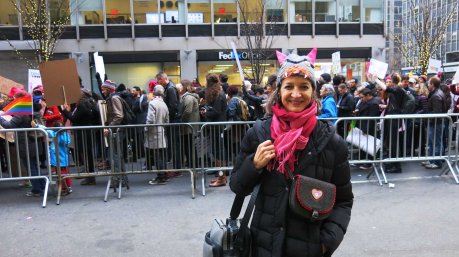
A roaring tsunami of peacefully protesting pink pussy-hatted women (and men! and kids!) washed over the planet last Saturday. I was one drop in that ocean, finally finding my voice after forty-five years of legal adulthood, where I was (mostly) not rocking the boat / being seen but not heard / being a “good girl” instead of a “nasty woman.” I now intend on being an active, not passive, voice in what is a truly terrifying time in our nation’s history.

Here is one tributary of that pink wave, the one I was a part of in the Women’s March On NY.

extralarge

march-8

I had already been commissioned in the past year to do some activist art for YogaCityNYC. The first was to address sexual harassment in the yoga world, a symbolic illustrative logo to accompany several articles and a community discussion.

yoga-abuse-final-revise-copy

Then came an illustration for a Vagina Scrum)

vagina-scrum-final-art-revise

and finally, now that the election is over (and the P****Grabber-In-Chief is still whining and tweeting and in denial about his 3 million + loss in the popular vote), this:

yoga-activist-final-lo-rez

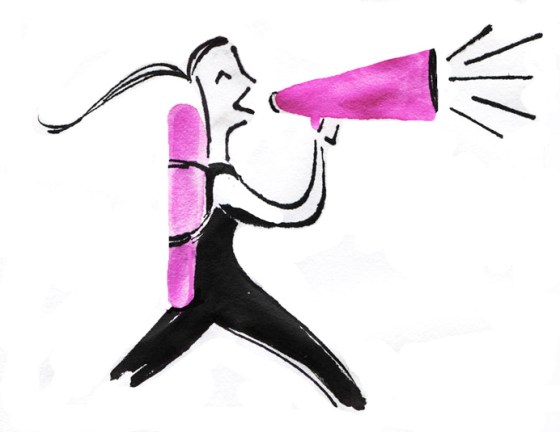
Every week, YogaCityNYC will suggest ways to not go quietly into that abyss,

with “Do This Now!

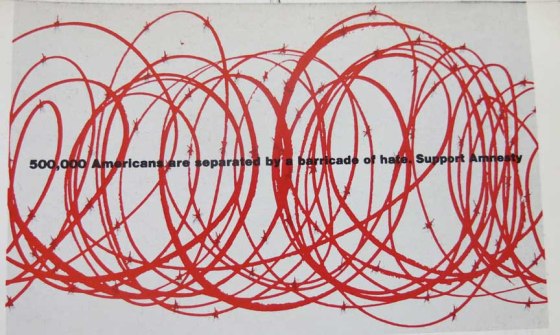
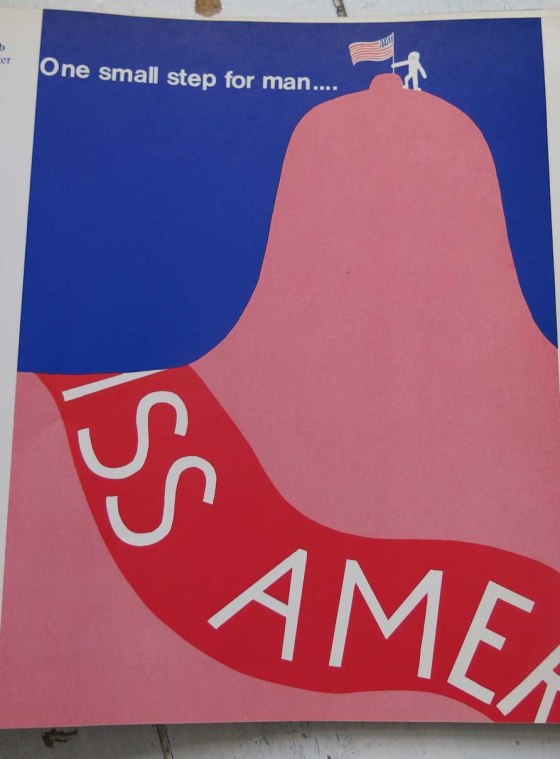
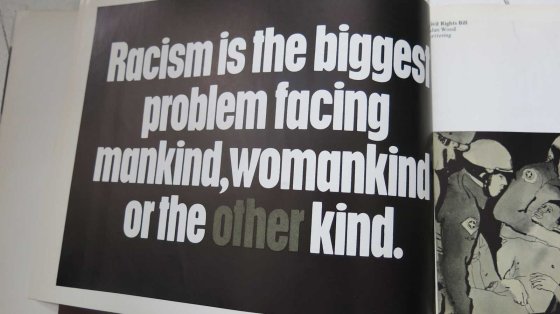
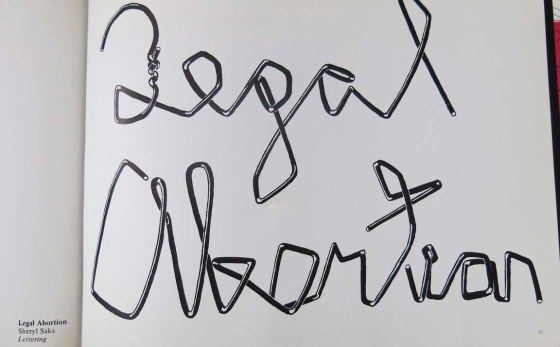
I was going through some of my art from the early 1970s, tucked in my attic, and discovered a student book published by Parson’s School of Design right at the time I was graduating. Just a few months ago it seemed as quaint as my Beatle scrapbooks. How far we had come! Now, it is au courant, all over again. Take a look.

flag-2

nixxon

barbed-wire

one-small-step

legal-abortion

racism

flag-1

That’s nearly one half of a century. We had come so far. We can’t give up that ground.

copyright sharon watts

Parsons School of Design credits:

1/Angelo Foccacio, 2/Bruce Handler, 3/unknown student poster, 4/Tory Ettlinger, 5/Sheryl Saks, 6/Alan Wood, 7/Melissa Schreiber

Close Knit

img_4135

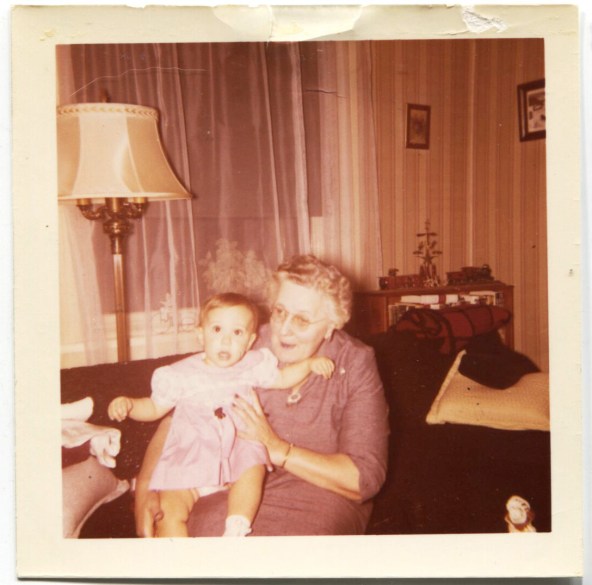
Great Aunt Lenore was one of those orbital family members I encountered a few times a year, and whose context in my early life was not entirely clear to me. I remember her mostly as a bosomy backdrop for costume jeweled brooches, with grey marcelled hair and a wall-eye that always looked away while she asked how did I like school. She was not a cheek-pincher. She was a spinster* who somehow knew that an ivory-colored vinyl manicure set was the perfect Christmas present to give to a nine-year-old girl.

We dispensed with the “great” and simply called her Aunt Lenore. She was Pappaw Watts’ older sister (by ten years), born in 1897. I came along in 1953, and as a child was a bit tentative around her. It might have been that eye which refused to look at me, or simply because her world was so different than mine. We didn’t visit her often, but the ebb tide of a memory— the occasional Christmas or Easter noonday dinner in her dimly lit Victorian dining room (my younger sister Dianne and I on best behavior)— sometimes laps at my feet.

The holiday ham would be festooned with Dole pineapple slices, tacked on by whole cloves, an exotic touch, and a far cry from our usual pit stop after church: the brand new McDonald’s off I-83. My shyness and disinterest in adult conversation pushed me into exploring the house’s dark shadows, punctuated by porcelain knickknacks and bright white spotlights of crocheted doilies draped on chair arms, a love seat’s back, or under an African violet.

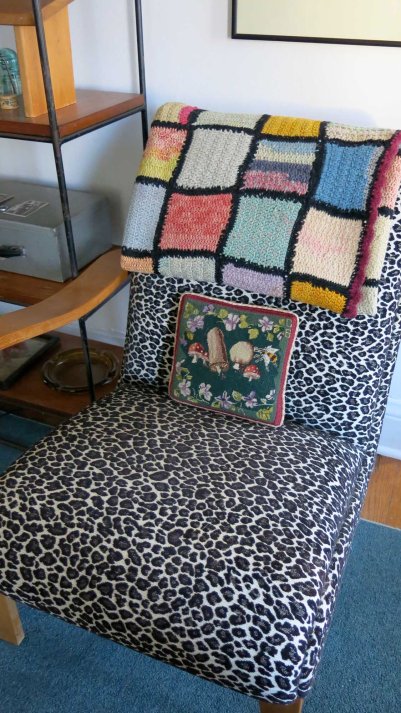
Of all the objects I have traveled the decades with, one that somehow has never strayed is a patchwork Afghan throw that she knitted. It most likely was a wedding gift for my parents (my father was her nephew). I don’t know which is more incredible: that I still have it or that she made it at all. Aunt Lenore was legally blind.

Her niece, my Aunt Anna Mae, is the lone custodian of memories predating my birth for my father’s side of the family. Anna Mae was my father’s younger sister, up until he was electrocuted on the job and our world’s axis took a seismic shift. Natural questions that would have been asked became stillborn in the wake of our personal nuclear family incident. So I’m asking them now. I learned that Aunt Lenore’s blindness was caused the day she was born.

“They put the wrong drops in her eyes. I guess they put drops in babies’ eyes as soon as they are born. That is what I was always told. She could see to get around but was considered completely blind.”

She went to the Overbrook School for the Blind in Philadelphia to learn a trade, and came out a masseuse. Who were her clients? No one I knew while growing up would indulge in what is now standard luxury spa fare. But massage was likely the muscle relaxant most prescribed by doctors of the time. E.R. Squibb’s followers were still experimenting in pharmaceutical labs, test tubes clinking, while she worked out knots (and knocked out her knitting projects).

I wish I could talk to her right now, woman to woman, spanning the centuries over a cup of tea: one of us a relic of the Victorian age, and the other of the baby boom era. Both childless, we each mustered—maybe even mastered—a creative life within the triangle of fate, circumstance, and will. She never left her hometown. I fled to Manhattan. And with me, I took that Afghan quilt.

*This (derogatory) term reflects the time I am referring to.
all-in-the-family

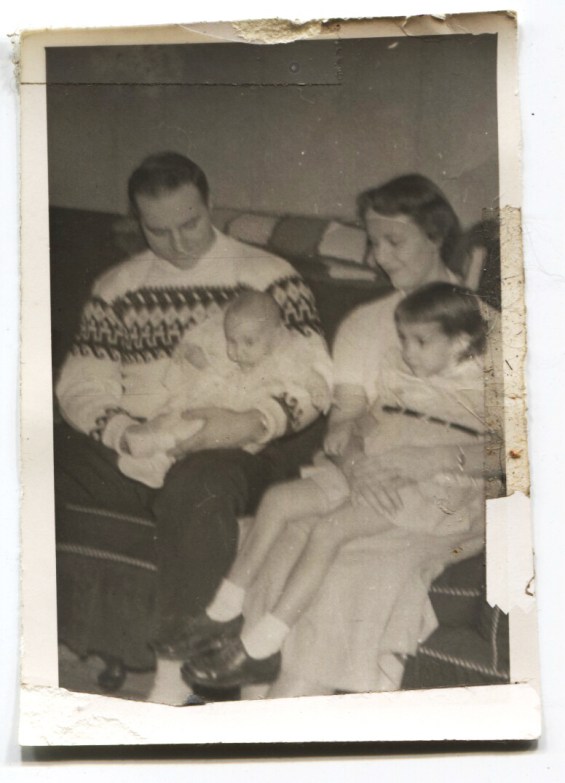
Our family – 1956

great-aunt-lenore-dianne-1957

Dianne & Aunt Lenore – 1957

grandpa-smolizer__1960

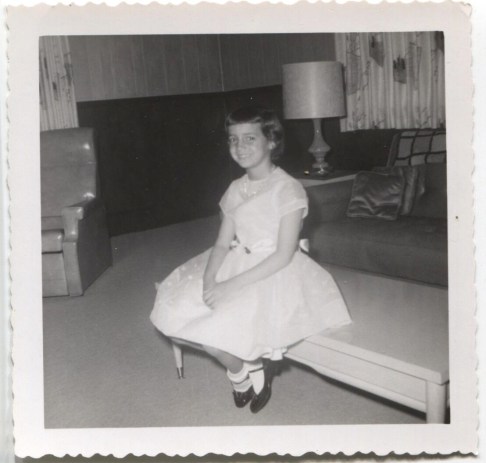
1960 – Me,  Great-grandfather Smolizer (Mammaw Watts’ father) and Dianne . . . and Aunt Lenore’s throw. Quite a contrast to our brand new mid-century modern living room!
me-on-coffee-table__afghan-1961

Easter 1961 – maybe a visit to Aunt Lenore’s after church?

afghan__-avenue-a__1971

1971 – Aunt Lenore’s throw has cozied-up my first NYC apartment, just in time for visiting friends from high school
theda__afghan-1974

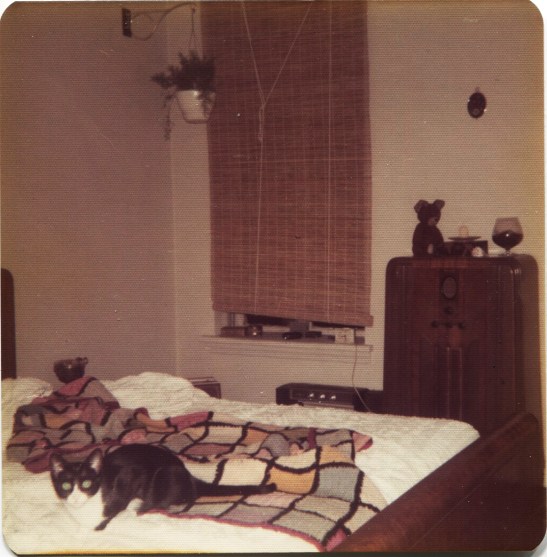
1974 – my first Hell’s Kitchen studio apartment, and a visiting kitty.

me-and-afghan-1975

1975 – my second Hell’s Kitchen apartment

me-roxy__afghan-1976

1976 – what self-respecting fashionista  didn’t have those Reminiscence coveralls? (And gel-sandals??) Roxy (and all my cats) can’t wait to get her hair all over that throw.

Me in leather__afghan 1979.jpg

1979 –  Aunt Lenore’s throw is a backdrop for entering the New Wave era. And a security blanket that connects me to where I come from.

The shoe box of ancient family photos has yielded this gem. I never knew who it was, until I recently scrutinized the back. In pencil, it faintly says “Lenore 1913.” She is sixteen, in a field, wearing glasses and feeling the tall grass and wildflowers that she can’t see. Weaving it into her expanding world.

aunt-lenore-1913-copy

copyright Sharon Watts 2016
“Are You a Tourist?”

I stopped in my tracks at her question. Me? Me, a tourist??

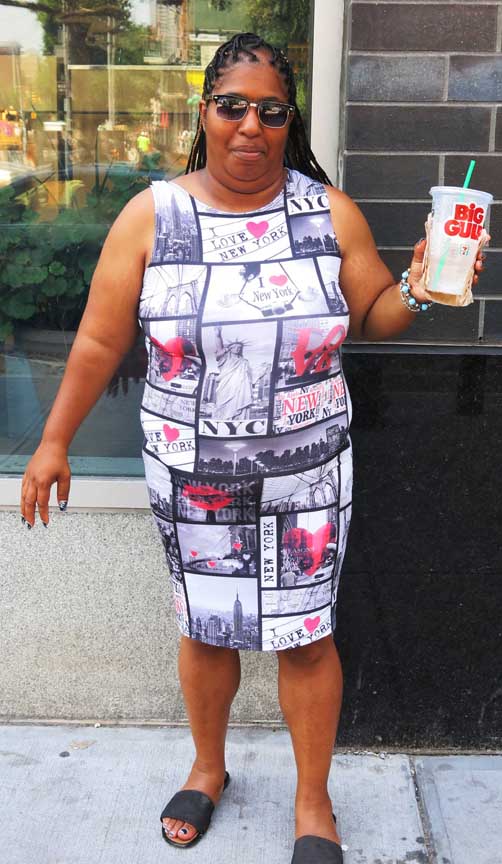
I had just asked permission to take a photo of a woman in a dress, after trailing her for several blocks. (Was it because I asked permission? Wouldn’t a real New Yorker just snap away?)

Desiree in her NYC dress

Desiree

It was a summer day in New York—the kind of day I can walk forever, popping into shade pools, sitting in a park watching kids play in the fountain, planning my next culinary treat (egg cream or Italian ice?) It wasn’t just the dress, it was her—walking down Houston Street, enjoying the day, just as I was. As if we were steeping in the city’s shimmering heat itself, with not a care about the ongoing incendiary news headlines. Immune, in our moments in the sun.

I’d just left the Bowery and was heading toward my old stomping grounds, circa 1972: the Lower East Side. It’s only been in the last year or so that I have reclaimed some of the street joy that I lost after 9/11. I am thrilled that it is still there, a reserve I am tapping into again.

I go on walkabouts to neighborhoods I remember from forty-five years ago, to see what, if anything, remains. Dismayed at razed blocks of tenements once propped up by sturdy mom and pop shops and bodegas, I now stand on a prominent corner almost anywhere and don’t know where I am without a struggle. There is no distinctive storefront, no defining character at all. Just four huge bank branches (and sometimes more) anchoring the intersection, along with chain mega-drugstores. A global corporate Mexican stand-off.

To me, these businesses have no right to be here taking up valuable real estate. Paying astronomical commercial rent fees, they are a blight—a direct sow from exponentially grown greed begun in a starter kit—all for $24 worth of wampum.

A lot of small businesses—especially those I remember from the 1950s thru 1980s—had the aura of commerce as being personal, accessible, and even creative. Over the decades, Chase, Citibank, Duane Reade and their ilk have spread as noxiously as crabgrass in July.

So, in answer to Desiree’s question. Yes. And no.

Here are some things that caught my eye recently, on the sidewalks of New York.

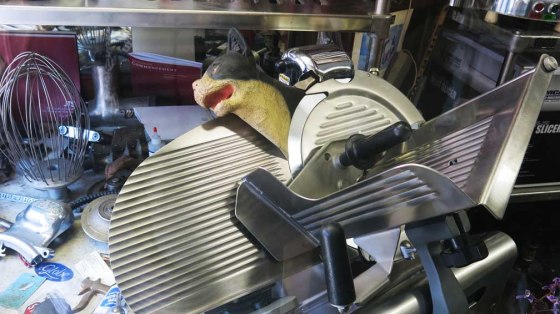
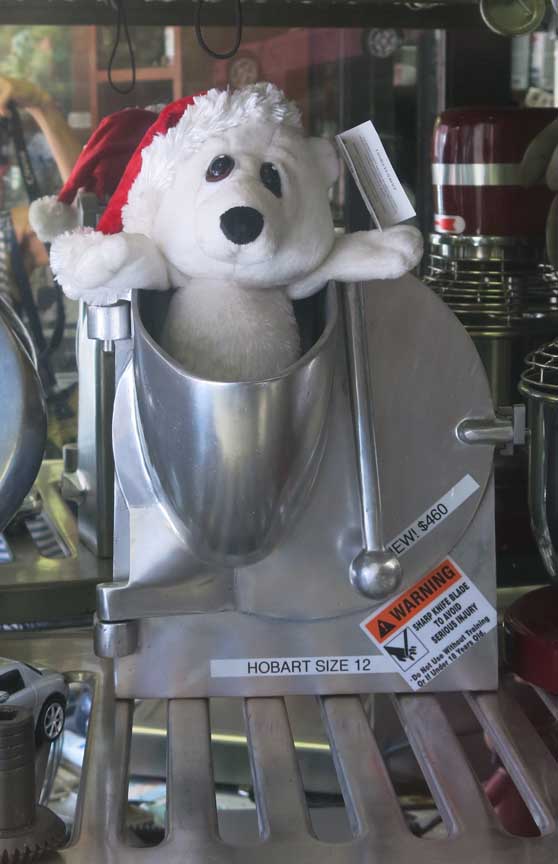
On the Bowery, wholesale restaurant supply stores are still tucked in-between facets of millennial glitz. A frustrated *creative*, maybe stuck in his family business, exercising a little black humor to save his sanity (and mine):

meatgrinder store veteran

slicer with dog head

dog in grinder

Barbie in slicer

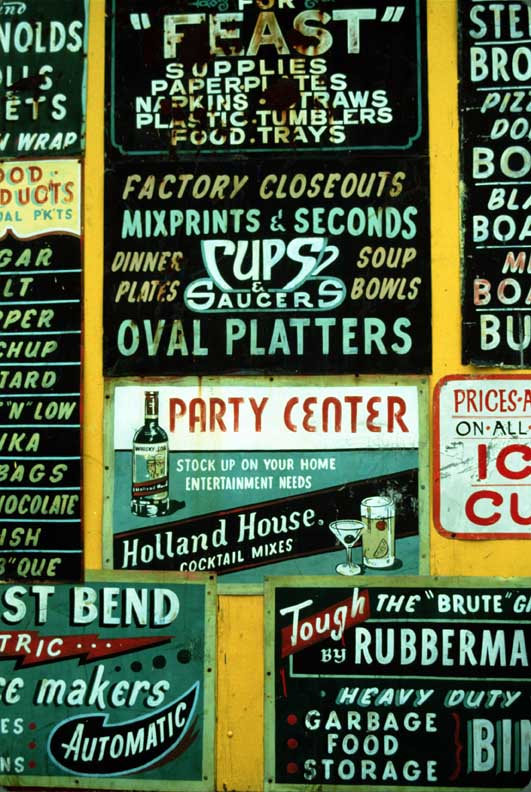
Some vintage Bowery signage, taken with my 35 mm Olympus, sometime in the ’80s:

72 - Bowery sign

photos copyright Sharon Watts

Before SoHo Became SoHo-hum

th

At about the same time that Rosanna Arquette’s character was “Desperately Seeking Susan,” deep in SoHo, I was in the same neighborhood desperately seeking a new frontier. It was the mid-1980s, and for nearly nine years I bore witness to the once desolate streets paving way to packs of traipsing tourists elbowing me off my own sidewalks. SoHo was no longer my backyard, but becoming a brand.

I moved to Eastern Parkway, Brooklyn, a mostly West Indian neighborhood that had taken root during “white flight” in the 1960s. On the corner of Washington Avenue, my once grand prewar building loomed with others along the Frederick Law Olmsted and Calvert Vaux-designed thoroughfare, in dogged determination. They were up against the invading crack epidemic and race tensions between Lubavitcher Hasidic Jews (who also had a stake in the area known as Crown Heights), and the struggling black community. The exhilaration of uncertainty laced with creative potential zapped me almost the way it had fifteen years previous, when I first moved from the suburbs of Pennsylvania to a down, but not quite out, New York City.

(Ford to City: Drop Dead!)

Across the street I faced the splendor of the Brooklyn Museum of Art and the Brooklyn Botanic Garden, behind me were doberman pinschers on brownstone rooftops patrolling the drug dens below. I was sandwiched in between, and continued working in my sprawling apartment on my commercial illustration, delivering it to Manhattan clients in person via the IRT.

While SoHo was busy morphing from an art mecca to a shopping mall, there were some genuinely exciting moments, as street art and graffiti blurred with fashion, fame, music, and action. Inevitably, innocence soured into irony that girded the cast iron district, and Art and Commerce clamped together, squeezing out anyone and anything that could no longer survive or no longer wanted to.

images

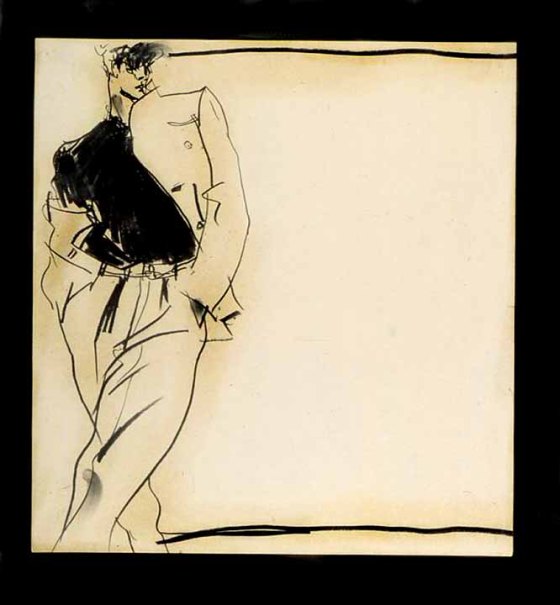
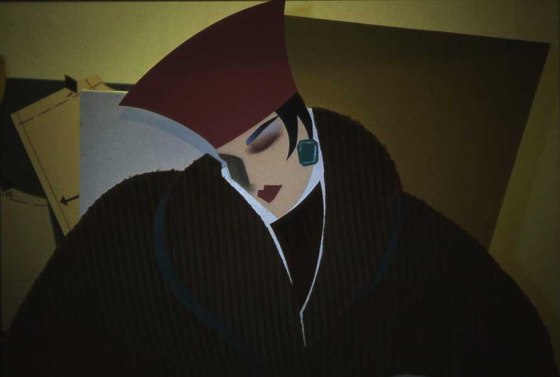
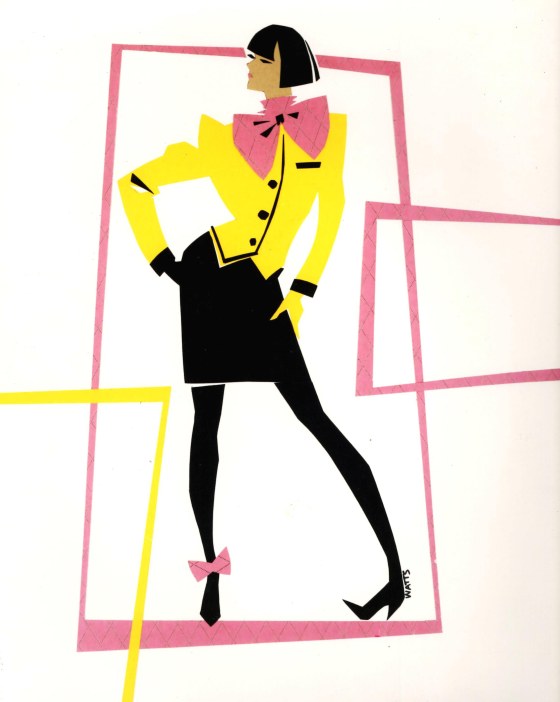
But before the tipping point, living in SoHo was fun and thrilling. I was creating fashion art churned up by street energy and the music on my MTV.

(Beep Beep!)

black T, white jacket

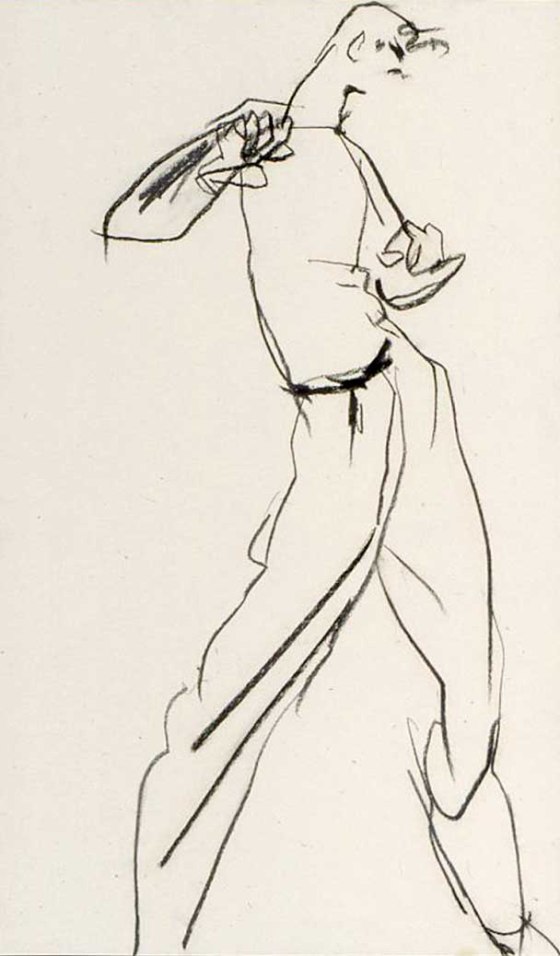
1980 – Steven Meisel’s adult class

Ilsa - fabric collage - 72

Early 1980s – mixed media (fabric, paper, pastel)

Angst - 72

1980 – Steven Meisel adult class

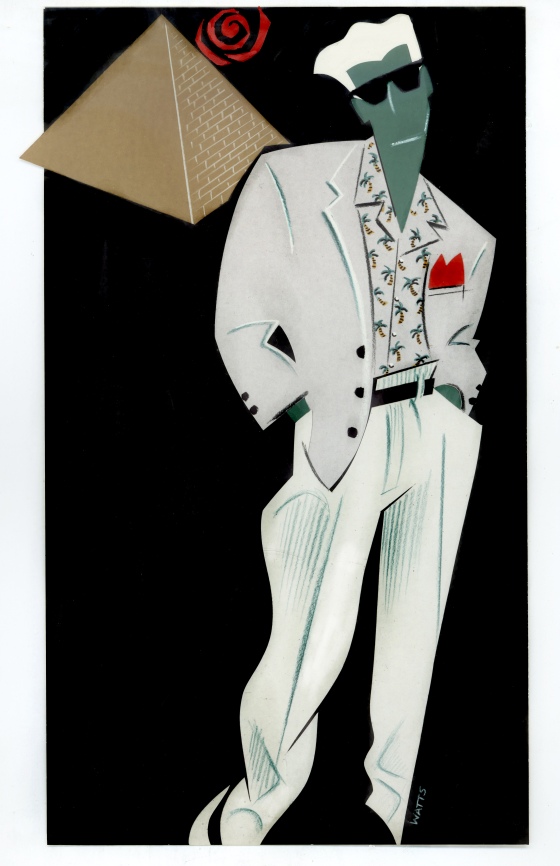
 cut paper-pyramid.jpg

Miami Vice/Bowie influence (mixed media). And who didn’t have Wayfarer Ray Bans?

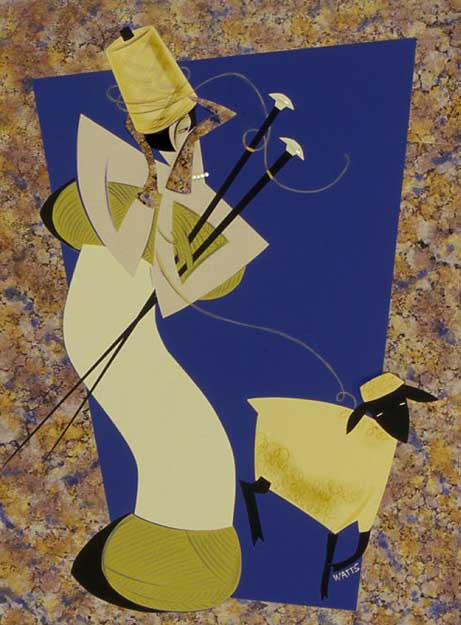
Ms. Skein - 72

Ms. Skein ~ Promo for Wool Council (mixed media)

Cut paper

Cut Paper

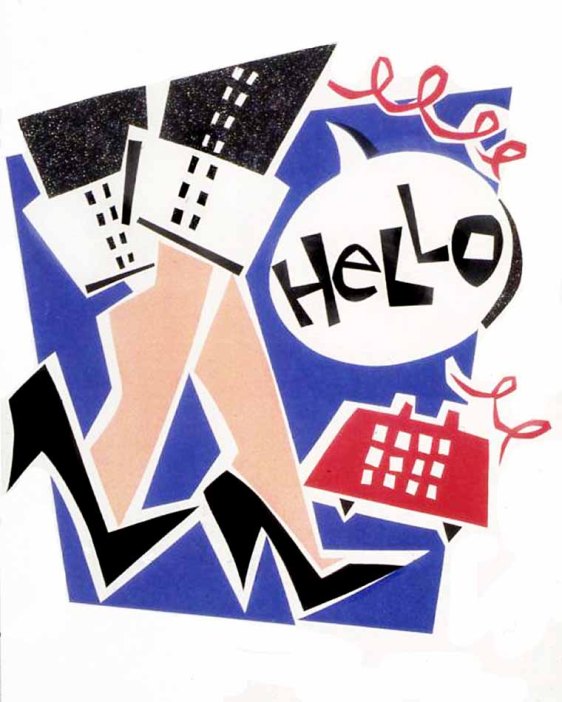
Hello - cut paper

Cosmopolitan Magazine job – mixed media (Cello-tak & paper)


All street photography snatched from the internet.

All art Copyright Sharon Watts

More links to SoHo street art:

The SoHo Memory Project

Jeremiah’s Vanishing New York

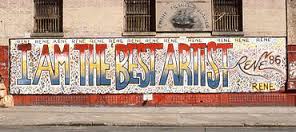
I AM THE BEST ARTIST

Carrie Donovan & The Gray Lady & Me

Me- NYT

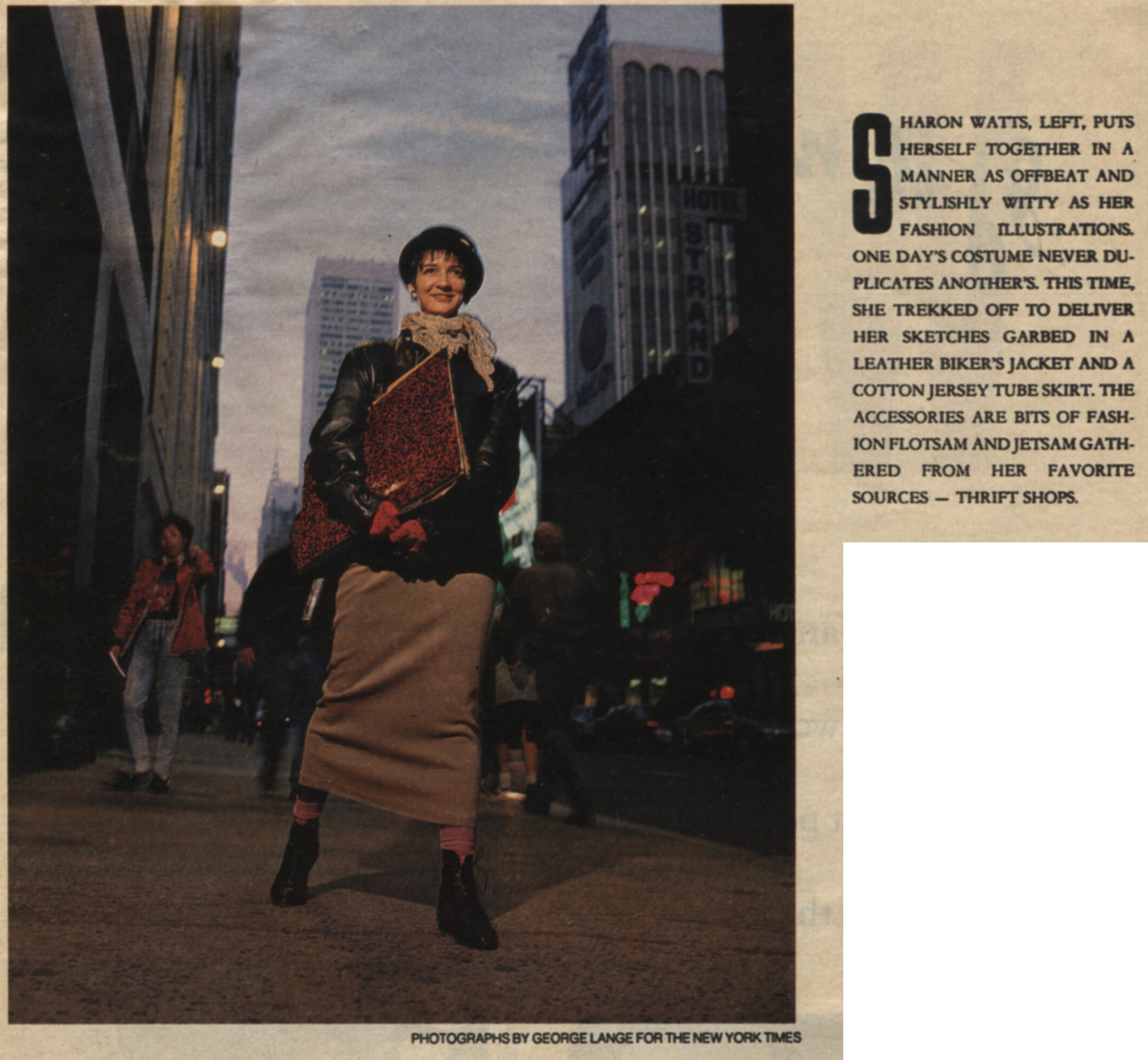
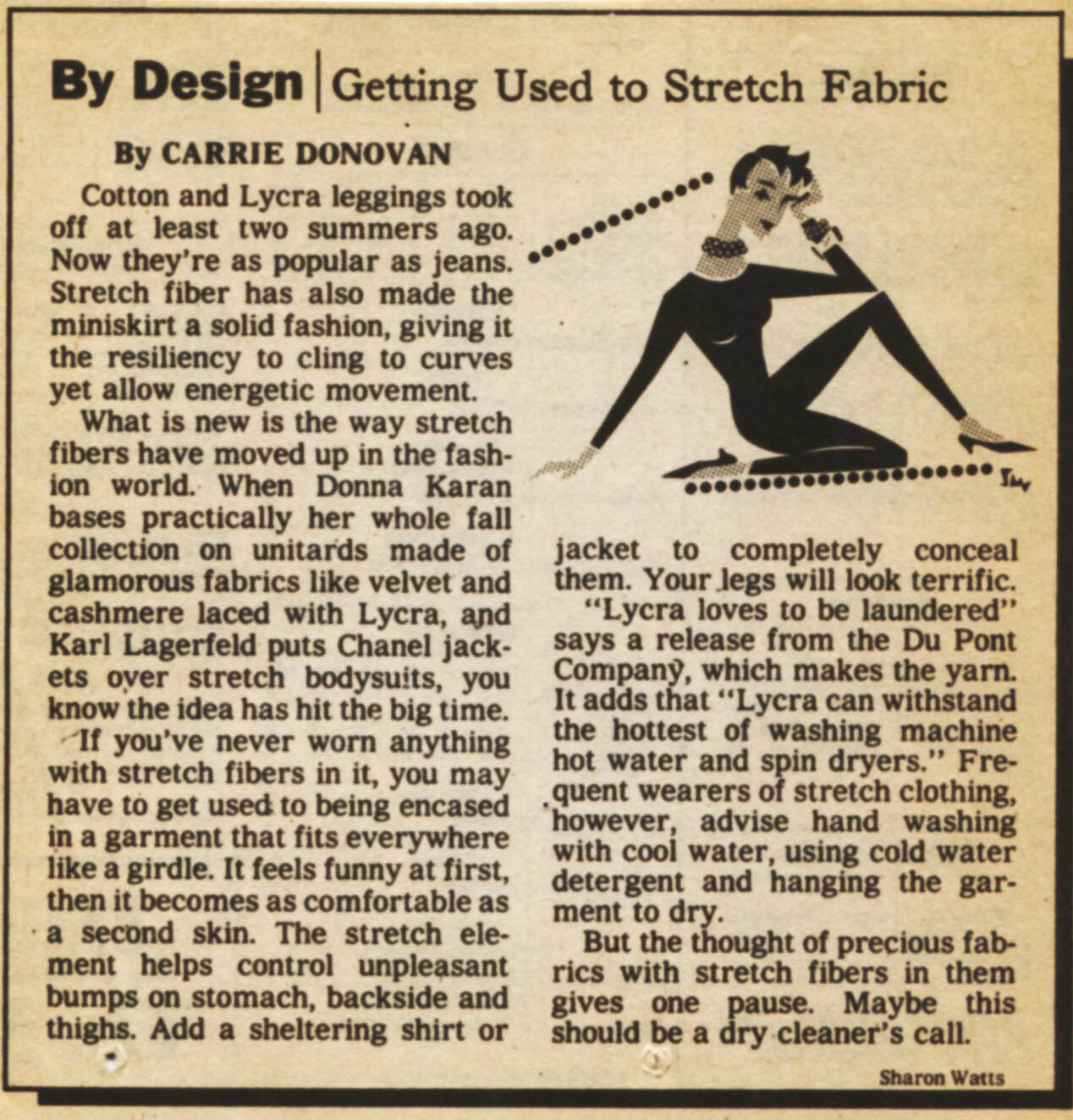
In 1991, I was being photographed in front of The New York Times building on West 43rd Street, its globed lamps and distinctive typeface serving as focal points while prompts were called out by the photographer, George Lange. My large art portfolio was wedged under my arm, tight against my leather biker jacket-clad torso. With my Great Aunt Lenora’s crocheted scarf cocooning my neck and a tube skirt snug around my legs, I strode down the block like I owned it. Looking slightly up, my face was captured in a smile, crimped along the edges with a bit of self-consciousness.

th

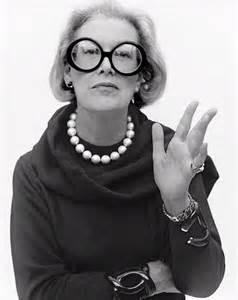
I was chosen by The New York Times fashion editor Carrie Donovan—a character right out of the Audrey Hepburn classic film Funny Face—for a Sunday Magazine feature story about Manhattanites deemed to have personal style. Carrie, in her ubiquitous black and leopard prints and super-sized accessories, saw me once a week in whatever ensemble I had thrown together that day; I was also the illustrator she had chosen for her By Design column that appeared Tuesdays in the newspaper’s Style section.

I would enter the mythic, monolithic building from the street and head over to a line-up of phones on a marble ledge, waiting to be called into their roles as liaisons with people higher up in this bastion of journalism. Dialing Carrie’s extension, I passed the receiver to a security guard, then got the nod to go through the turnstiles and over to the elevators. Once I landed on nine, I made my way through a moat of bullpen cubicles, then was given the signal and admittance to Carrie’s inner sanctum. Now I would experience the heady feeling of being the center of her universe for ten minutes, as I presented my art for her approval.

NYT__By Design__Trends

“This is divine!” she might warble.

Or “Hmmm, don’t you think it’s just a bit de trop?”

NYT__By Design__stretch fabric

Sometimes, if she was just finishing up the story, I had to do the job entirely on the spot. This last minute deadline would send me around the corner to the design department to borrow art supplies and a surface to work on, a pearl-encrusted fashion gun to my head.

My weekly gig was fun, sometimes stressful, but most of all, a fulfillment of destiny. I had promised myself when I was a teenager that I would one day be in The New York Times. I had meant my artwork, but here I was, like Marlo Thomas in That Girl, and Mary Richards in The Mary Tyler Moore Show, in love with my job, my life, and most of all, my city.

I did this for nearly a decade, during which time Carrie eventually retired and passed the reins of By Design to Anne-Marie Schiro, and The Gray Lady went to color. I still was making my weekly rounds, in person.

That wasn’t Carrie’s final act, however. She went on to be a surprise hit in Old Navy TV ads.

On November 12, 2001, Carrie passed away. I hadn’t noticed, hadn’t realized, hadn’t wondered until much later. I was too caught up in post-9/11 and missed her obituary. When I found out, I was dismayed that this grande dame had quietly left the stage without my being able to say au revoir.

So I’ll say it now. It was a pleasure working with and for you, not a bit de trop, and always divine.

Hawaiian Punch

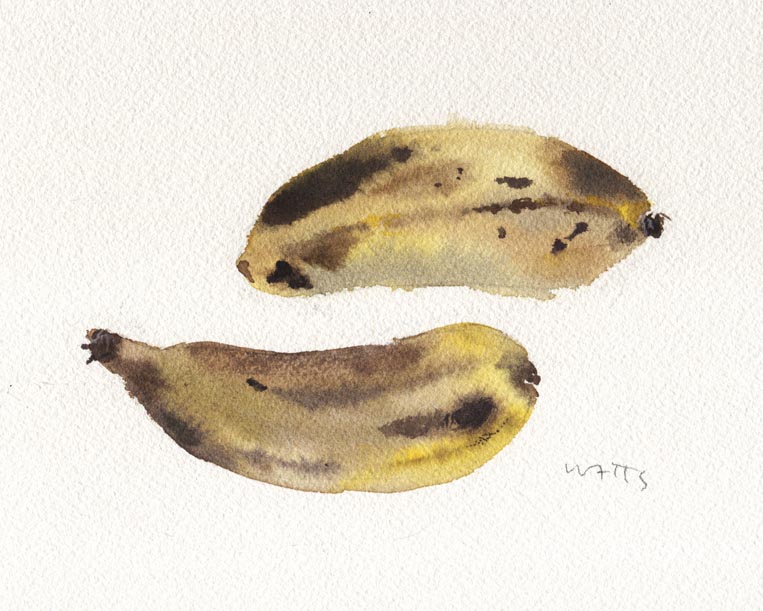
mangoes copy

Hawaii is the kind of place I can visit for two weeks and feel my paradise-absorption levels at full saturation. By the end, I can’t take any more of all that good stuff:  sunshine, pristine beaches, postcard sunsets, snorkeling over reefs teeming with jewel-toned fish in turquoise water warmer than the air. And did I mention the fruit? Mangoes, passion fruit, pomegranates, dragon fruit, apple bananas, pineapples, papayas…all just hanging off trees for the picking! Maui is fruit smoothie heaven. And that is where I was, the end of November, during the blizzard that had blitzed Buffalo. Winter had arrived in New York. And I was in a good place.

I was there to help my friend with some home decor projects, so it was a kind of workation. It also was a place where, I had asked her six months previous, I might have a little mini-nervous breakdown, should I need it. Just a little quiet corner.

It turns out that, happily, I didn’t. So what can I do? I asked. She handed me a paint brush and pointed at the louvre doors. In my life I had done this task twice before, decades apart, each time swearing never again. But this time was different. I was on the porch, overlooking her tropical garden, and her gardener kept bringing me fresh-picked apple bananas. New to me, these small cousins to the ubiquitous bunch of Chiquitas in my kitchen seemed to be infused with something “other”–mysteriously evasive yet citrus-y.  I became hooked. I had my iPad and Ella Fitzgerald wafted over the warm air. I could paint louvre doors forever.

apple bananas

My Arches watercolor block was in my carry-on luggage, and so, dammit, I was going to paint! (I have a history of good intentions but no action when I pack art supplies). I wasn’t all that ambitious to switch brushes, but I took a few moments to paint what was around. I didn’t do the dragon fruit justice–the skin is luminous, neon, even as it aged.

dragon fruit copy

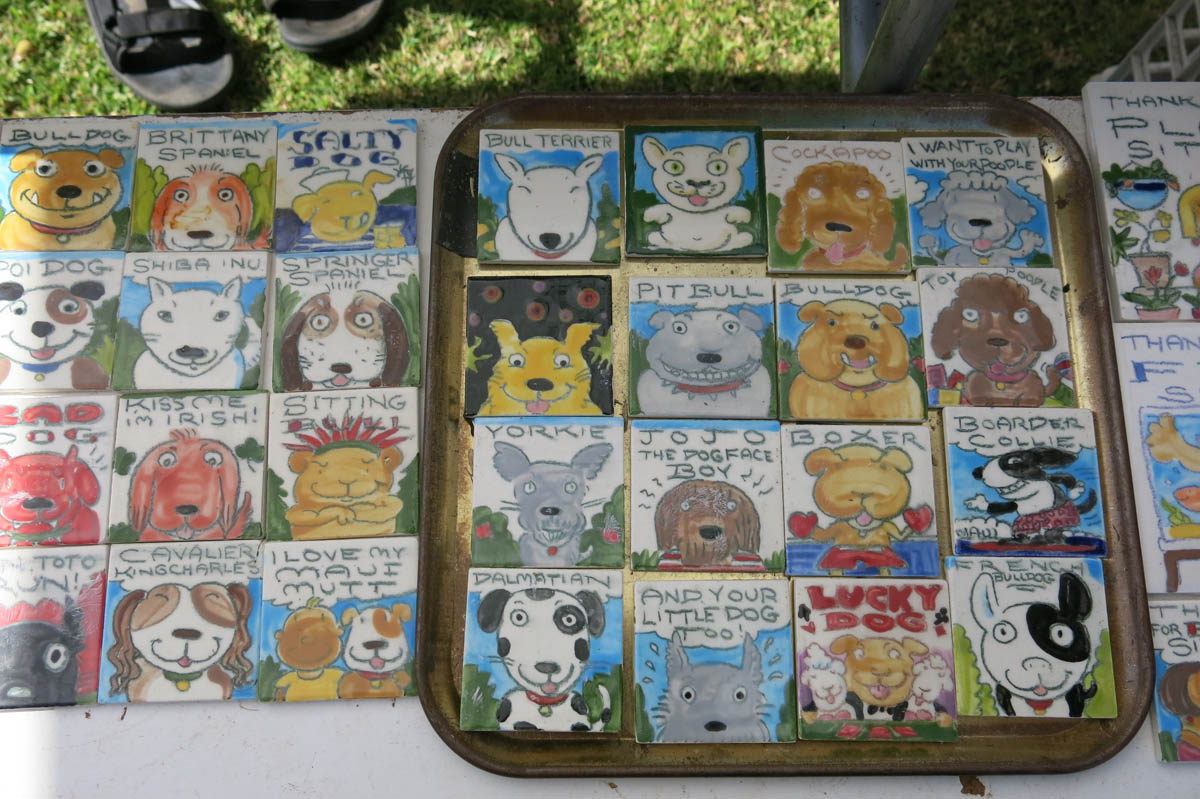
While wandering around the Maui swap meet, I saw some familiar characters drawn on tiles and magnets. Sitting there with his wares was Kimble Mead, one of my favorite illustrators from the 1970s and 1980s, whose work adorned every magazine I read in New York City at that time. He had moved to Maui, ditching those icy sidewalks and portfolio-schlepping. Kimble’s style is just as delightful as it ever was–sunny, quirky, and easily adaptable to his new home. I snapped up a few.

Kimble


Kimball Meade art

I visited some galleries in Lahaina and saw a lot of tourist art, or “art.” Picasso rubbed shoulders with Anthony Hopkins, Miro with Tony Bennett, Rembrandt with Red Skelton. Gaudy souvenirs and impulse purchases for bottomless wallets. Once again I felt that I don’t really know who my market is, or if I even have one. Who wants to buy a watercolor of a couple of aging mangoes or apple bananas? Not in Lahaina, where you can buy a REAL Hannibal Lecter!

th

I wandered the neighborhood my friend lived in, and noticed the mailboxes. That became a photography theme I’ll share in the next post.

mailbox 3

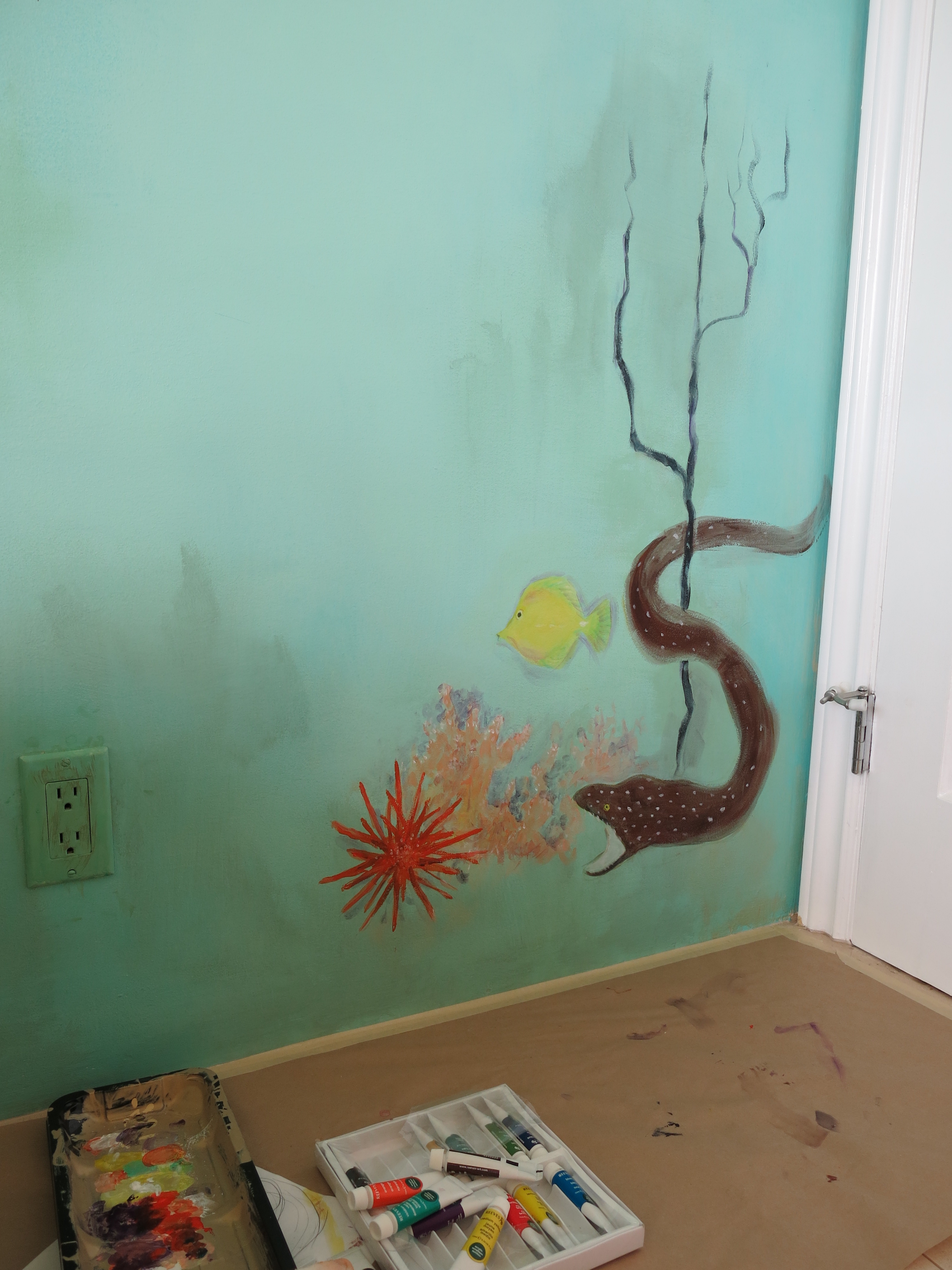
My friend requested a small mural in the corner of the guest room against a sea of faux painting. I braved Black Friday at the Queen K Shopping Center and ducked into a Ben Franklin arts’n’craft store to buy a set of acrylics. When I came out to the parking lot I discovered the car battery had died. Waiting for AAA was a very zen experience, the lesson of which got lost in one of the time zones I passed through. The new battery became my hostess gift.

IMG_2478

And just so you aren’t disappointed, here is a Hawaiian sunset. Sometimes it’s good to be a simple tourist.

IMG_2367

photos copyright Sharon Watts 2014 (except Anthony Hopkins art)


Candy Cane Memories

Bettcandycan

credit: Me and My Green Bin

Growing up in the early 1960s, and being a kind of girly-girl, I do remember I liked my food pink. And sugary. When standing in line with my mom at Acme Supermarket, the impulse buy of choice near the cash register was those awful (to me now) pink marshmallow cookies with white coconut sprinkles. This was before red dye #2 was banned.

vintage mom & me

My mother, Shirley, and me in her state-of-the-art kitchen, 1957.

But at Christmas time, we made cookies. Mom did like to bake, if not actually cook. (Hey, it was the Atomic Age, and she had better things to do, like paint!) One of my favorites from that era was candy cane cookies. We had to divide the dough, and color one half. Then keep it moist until we twisted the braids together and curved them into the cane hook. Some baking, and voila! This was a cookie that actually tasted as good as it looked, as opposed to sand tarts. For all the glitter and sprinkles I shook onto them, they were always a letdown to me after they came off the sheet.

I no longer bake anything remotely like the candy cane cookie, since I have gotten much healthier in my eating habits. But a recent call for baking memories from one of my favorite blogs, A Hundred Years Ago, got me thinking about these cookies, and I realize that they probably still influence me today, in my art, if not my baking.

Happy Holidays to all!

Let it Snow! -card

I want to credit a fellow blogger for her contribution to the candy cane cookie. I shared her photo of the original recipe. Read her post for more on this classic!

How Do You Like Them Apples?

IMG_2223

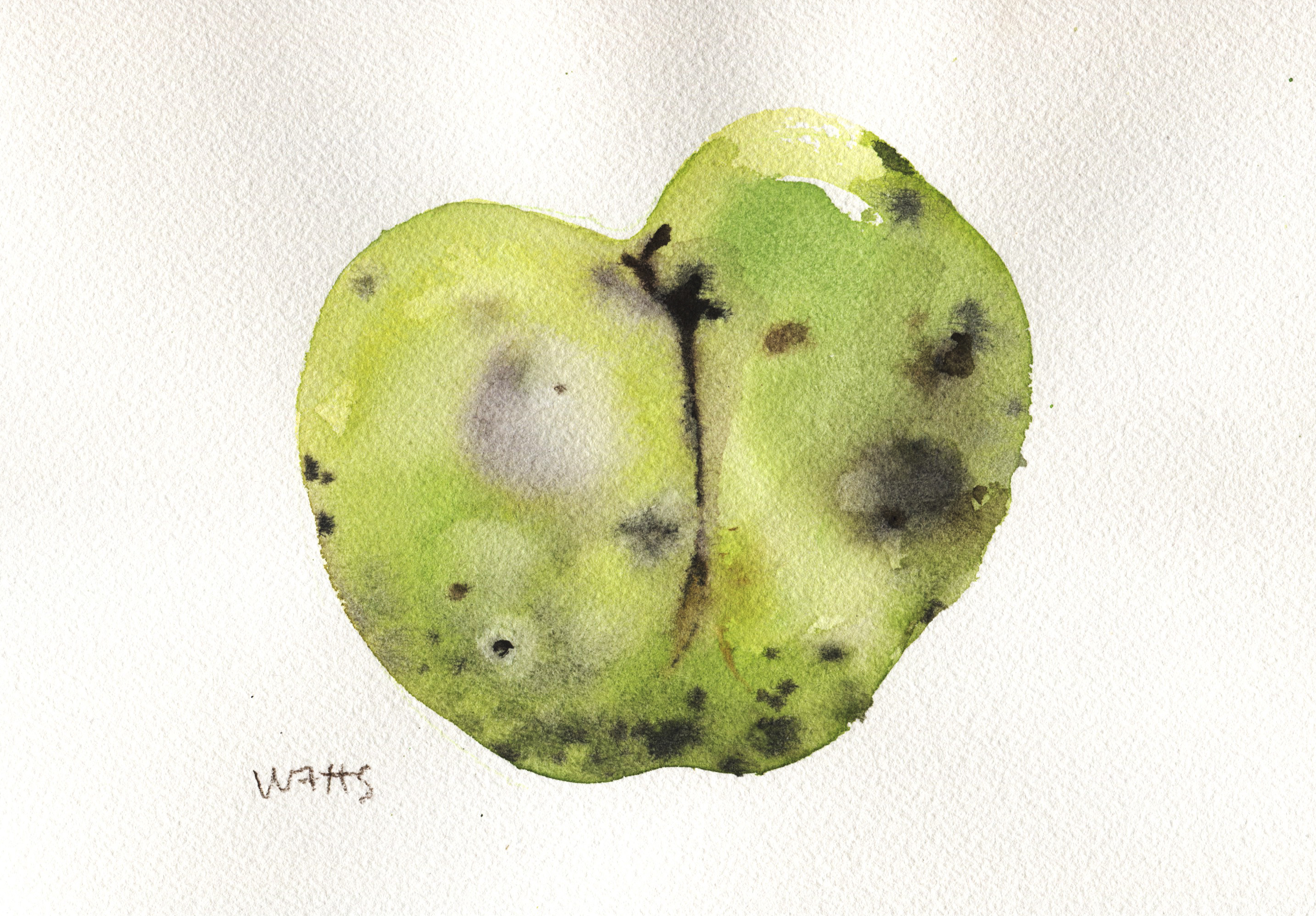
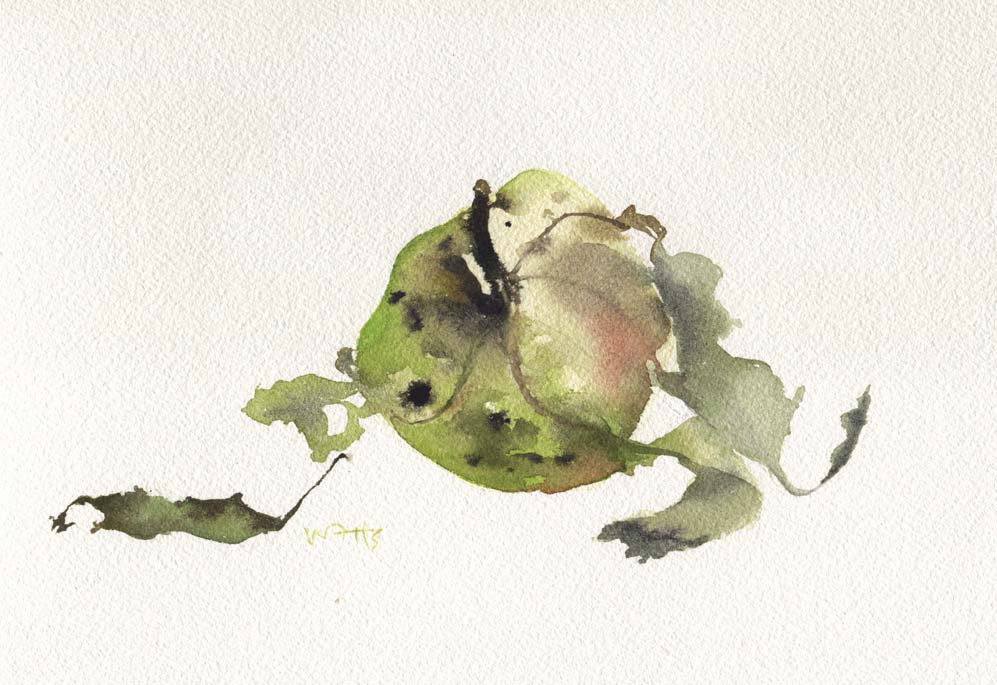
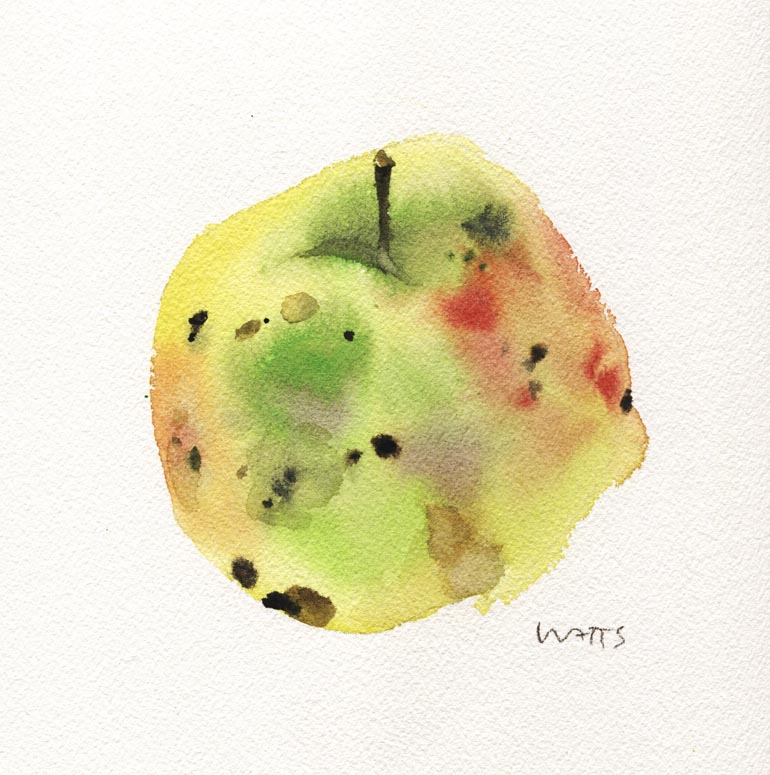
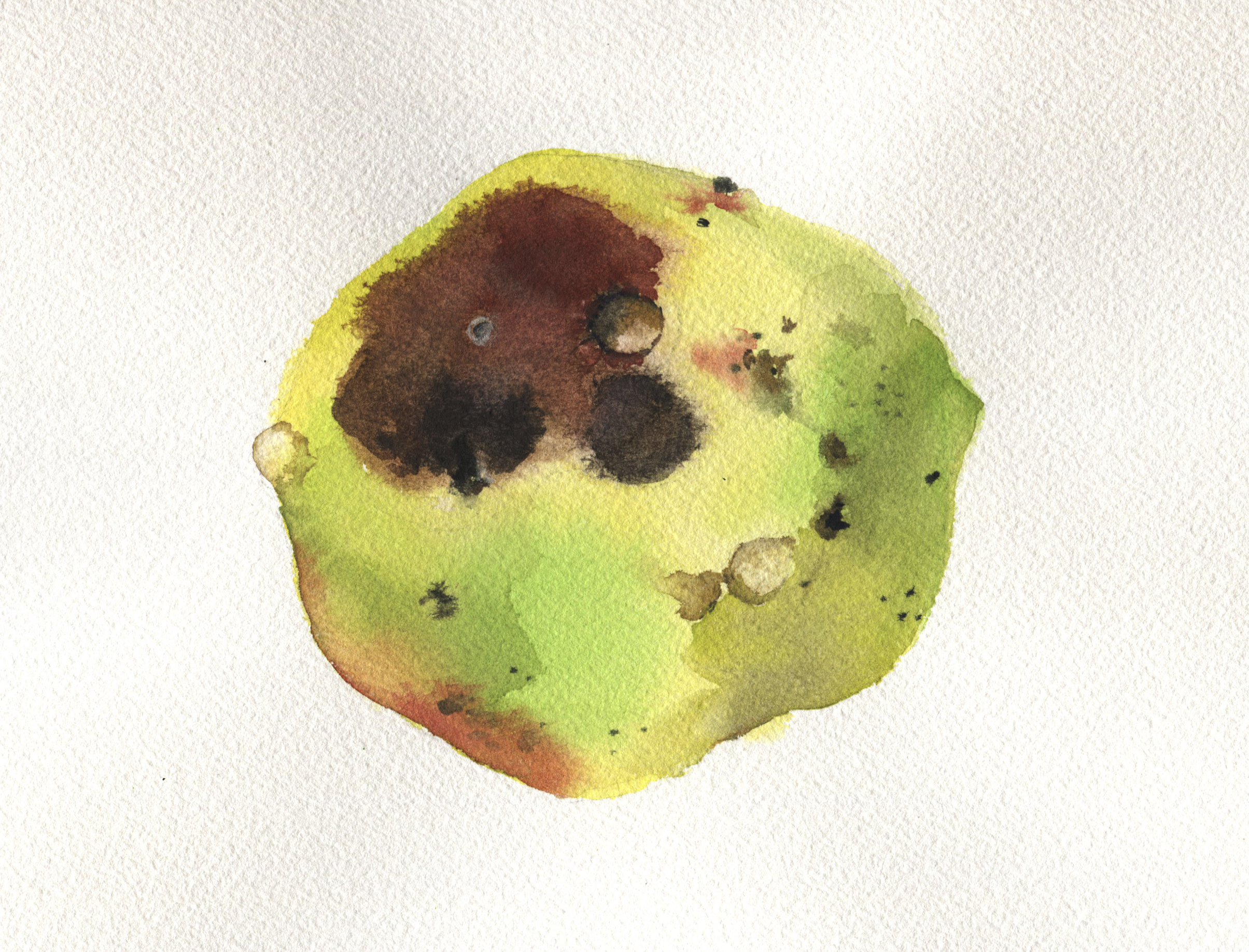
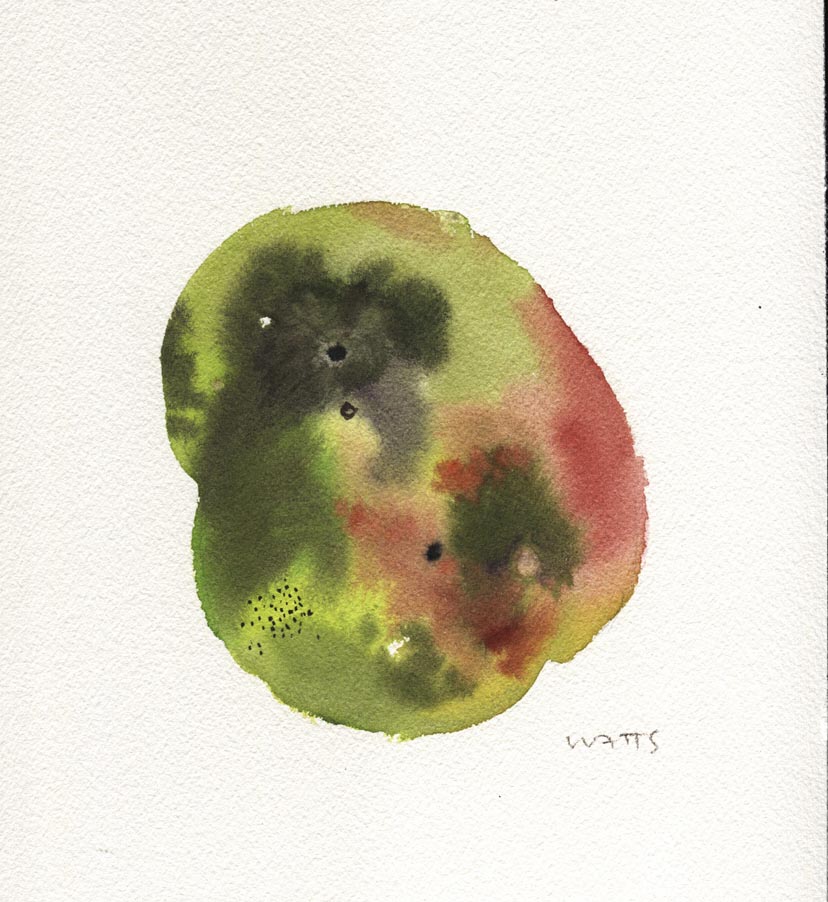
About a year or so ago, I began to paint with watercolor at the home of my friend Violet. I started with whatever was in front of me on the Formica table–usually a piece of aging fruit. Never a fan of doing still life (I like action! gesture!) I decided to view it as a challenge rather than a bore. Soon I realized that I wasn’t really painting fruit or vegetables, I was just focusing on the color, form, and detail in front of me. And such glorious detail–bruises, dings, decay! After letting the wet-on-wet color settle and dry where it wanted to (with a little help from me), I went in with a smaller brush and meditated on the beauty of imperfection. And aging. At this time in my life, the metaphor is too apt. Recently, I was helping a local landscape artist with her autumn pruning. She pointed to her apple tree and encouraged me to help myself, that they made good apple sauce. I knocked some down and thought, now I know what a real apple looks like. Each one was unique, misshapen to some aesthetics, but charming and unapologetic, and begging for a portrait. So I did, with each and every one. Granpa & Granny Smith copy apple cheeks apple and leaf copy motley duo copy solo  copy #6 Fading #7 Enigma copy Next I polished them off.

IMG_2214

IMG_2225

IMG_2228CHEERS!

Domestic Season

Pot holder rack

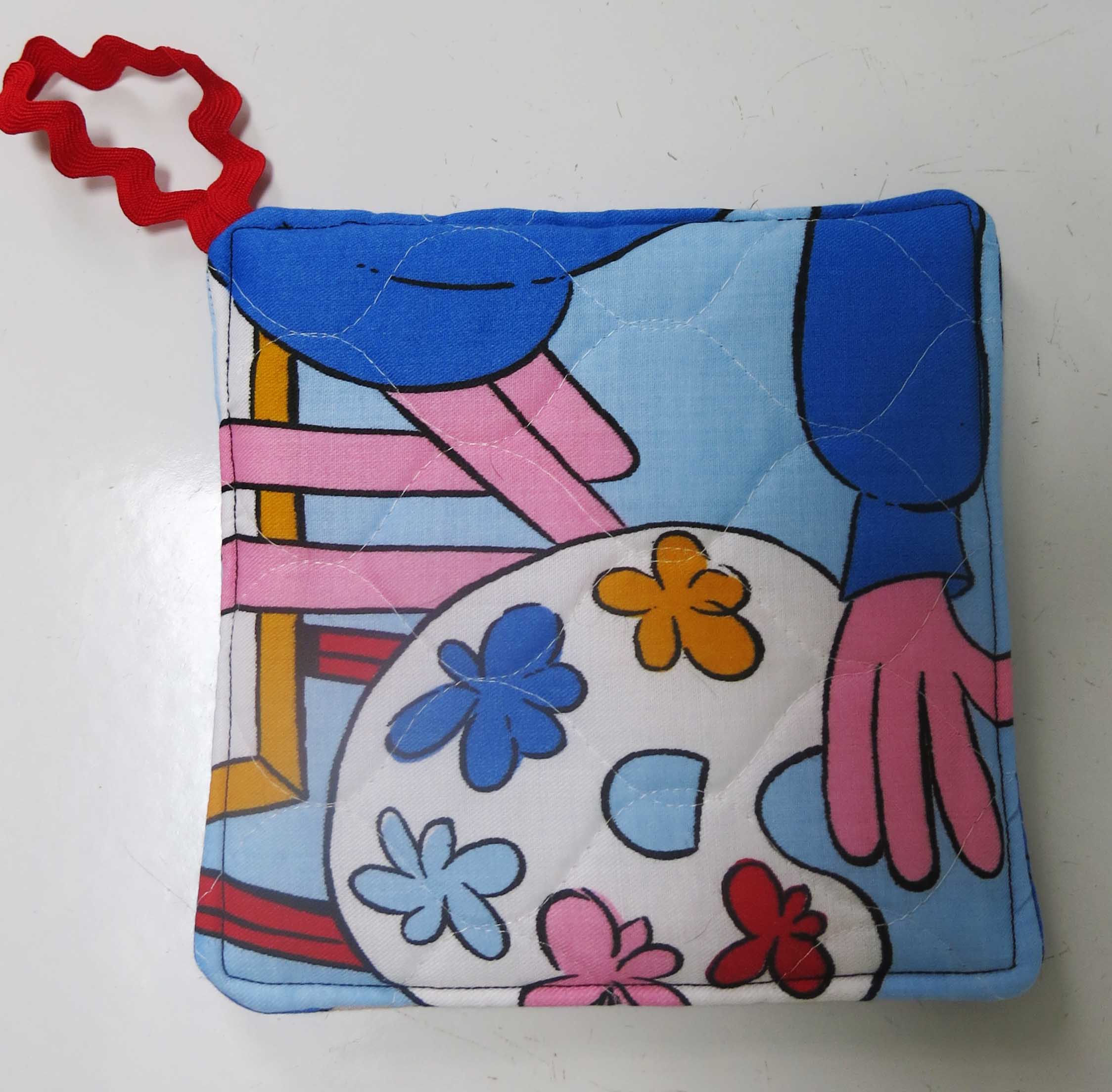
I happen to love pot holders. Humble little works of sewing art, they don’t seem to require a whole lot of expertise. Which is fine by me. I am not a world class seamstress and never will be.

My fabric is already here, ready to go, and has been for decades–I am a fabric hound. Once purchased, it either became something or not. I save scraps, and I still have yards of virgin territory.

A recent beneficiary of a new sewing machine (thank you, Kirk!), I am armed for the new season. After sewing up the four sides of my mini-masterpiece to the batting, I relocate to the corner of the sofa, manage to thread the needle, and slip stitch away.

As long as my attention span holds, I will turn churn out pot holders. I have no system, no assembly line; I just cut, pin, sew, admire, (rip out), and basically indulge in the sewing equivalent of comfort food. Some are already destined to be gifts, a few may be sold around the holidays. I’m not going to get rich here, but that’s not the point.

It just feels like the thing I need to do, that’s all. And that’s enough.

Pink Panther pot holder

Pink Panther quilted fabric remnant

Pink Panter 2

and the back…or front?

Park bench pot holder

One of 6 squares to be sewn, upcycled from a 1950s circle skirt

rose pot holder

Salvaged slipcover from the 1940s. On the back is denim from an old pair of jeans.

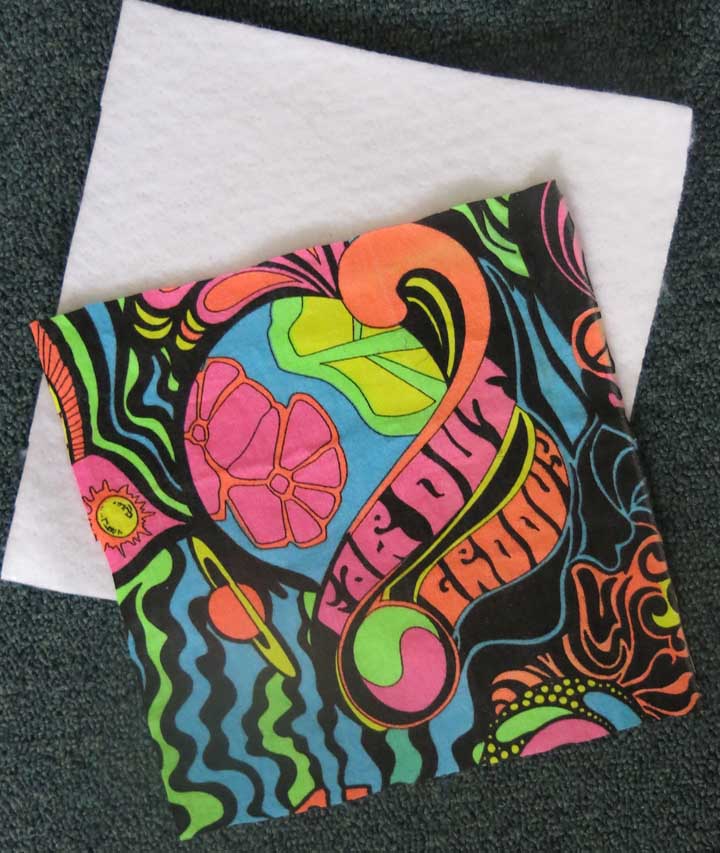
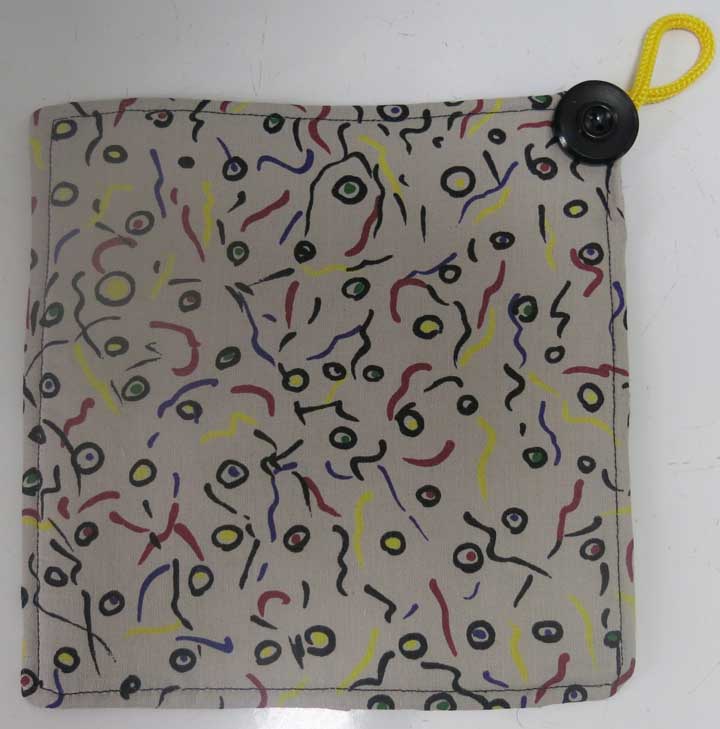
Groovy pot holder

Feeling groovy! From curtain panels that adorned a bedroom at the dawning of the Age of Aquarius.

Sperm potholder

Fabric from “the sperm shirt” (his, not mine)–bought in Paris when I was married, in the early 1980s.


And here is part of my collection:

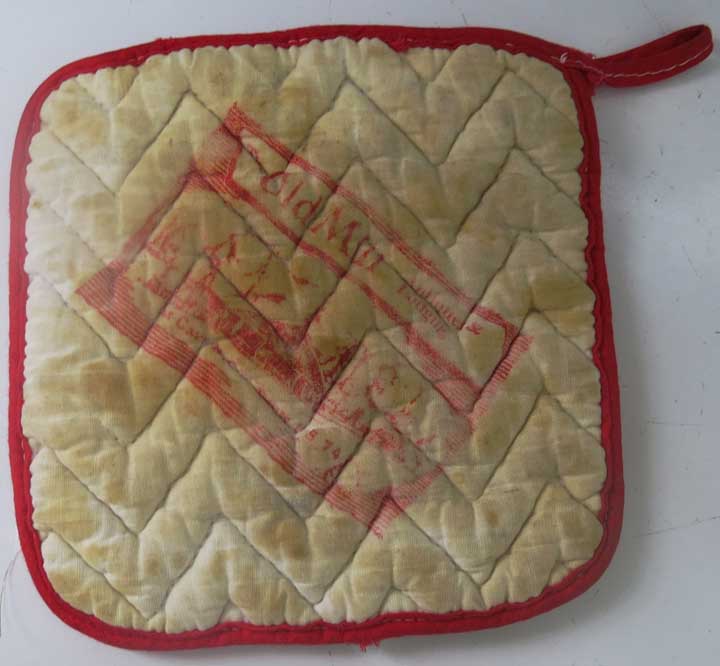
Old Mill pot holder

The Old Mill~ purchased on a early 90s road trip in Bat Cave, NC.

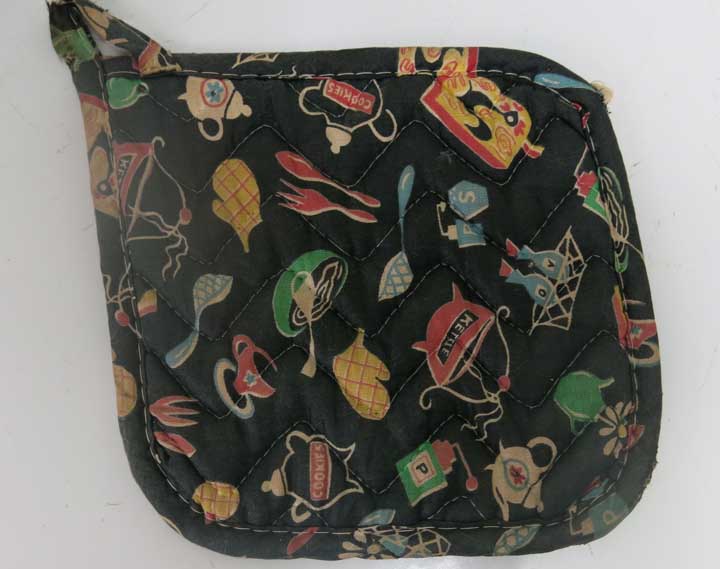
retro pot holder

1950s retro (a pot holder with mitts?)

Campbells Kids pot holder

Campbells Kids, erased by time. Mmm, mmm good!

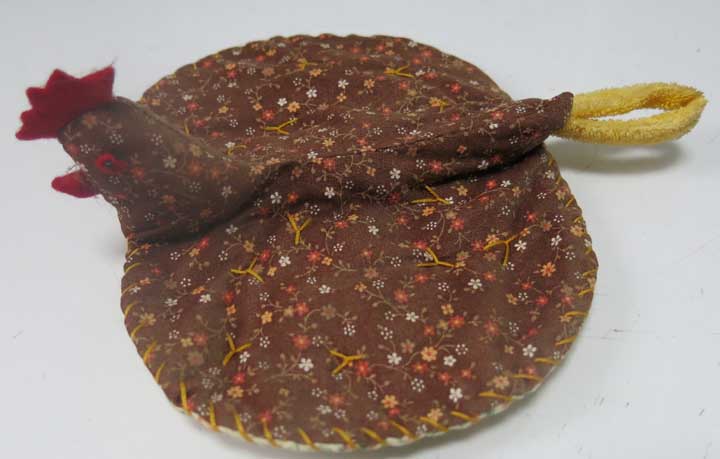
chicken pot holder

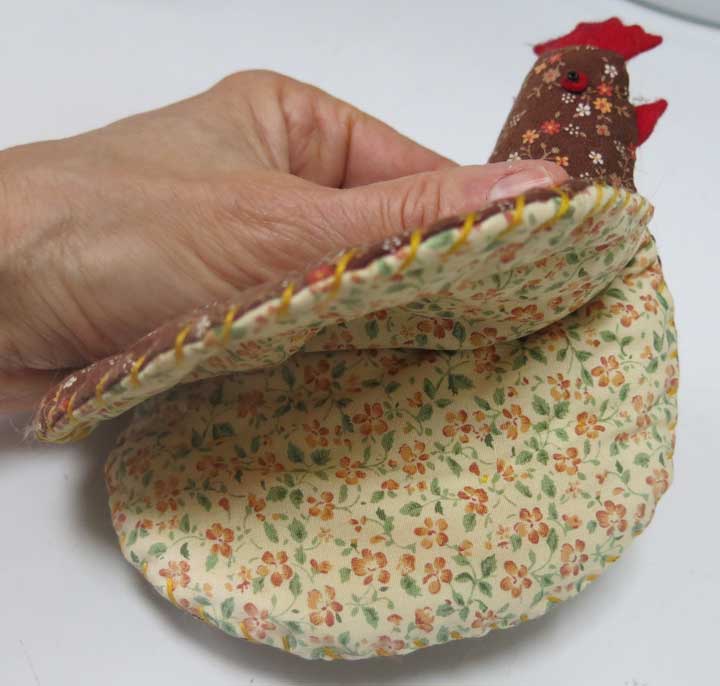
My Japanese quilter friend made me this. I love the chicken feet embroidery stitches (give or take a toe).

Chicken bottom

The Japanese always kick our crafting up a notch!

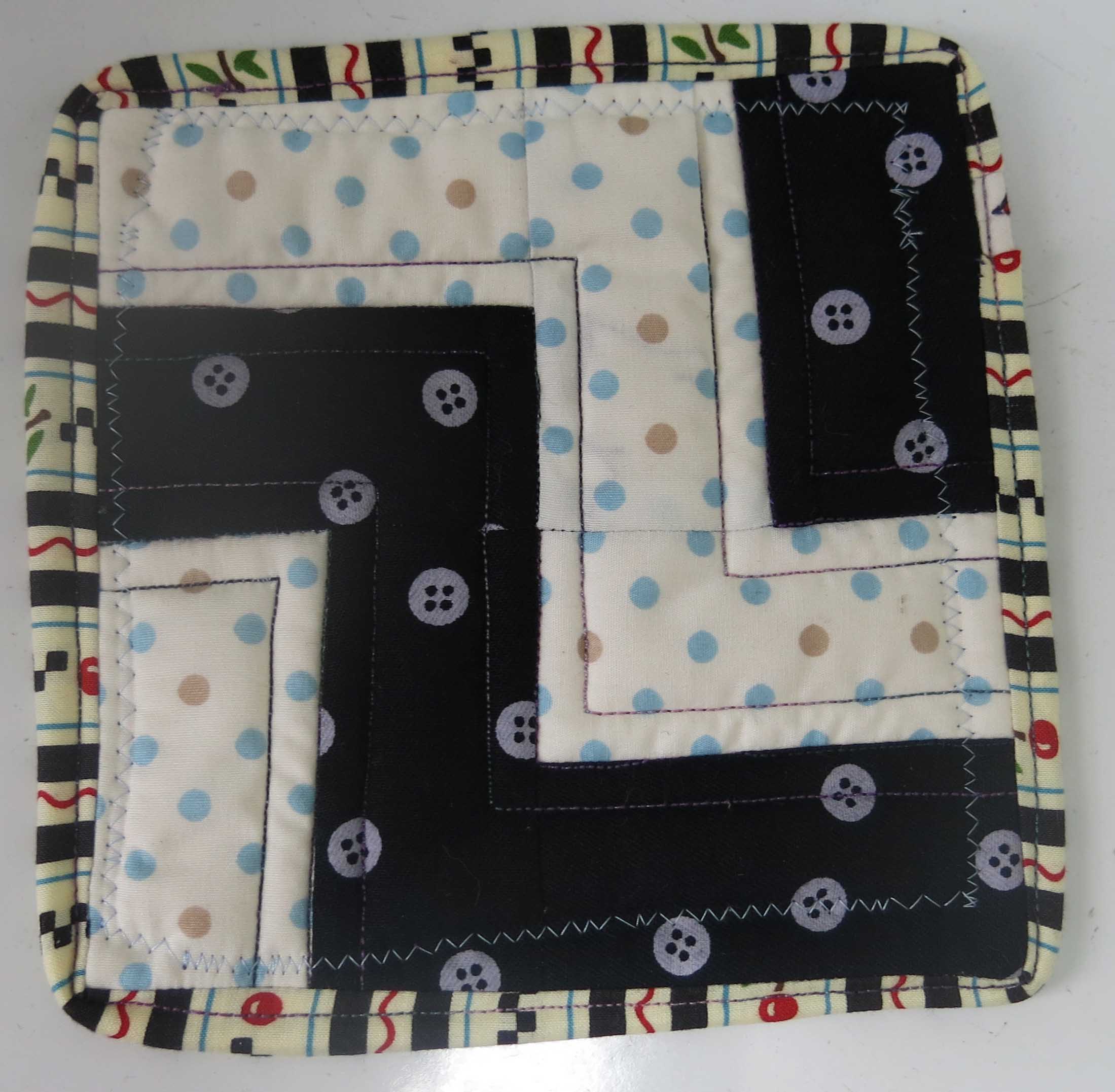
Marilyn pot holder

Made by my crafty friend Marilyn! Love the fabric with buttons printed on it.

So, pass the casseroles!

Never Too Late!

IMG_2122

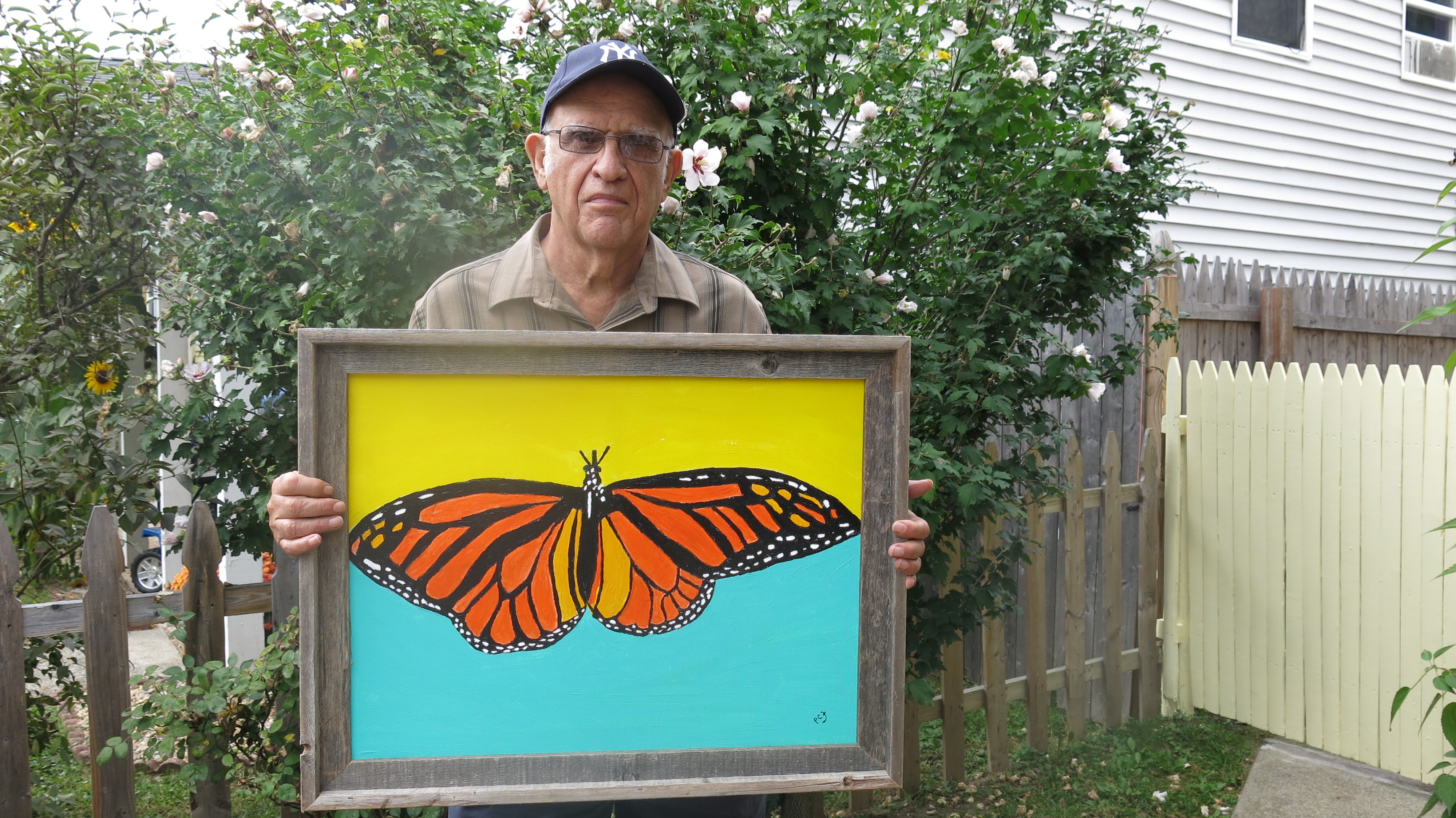
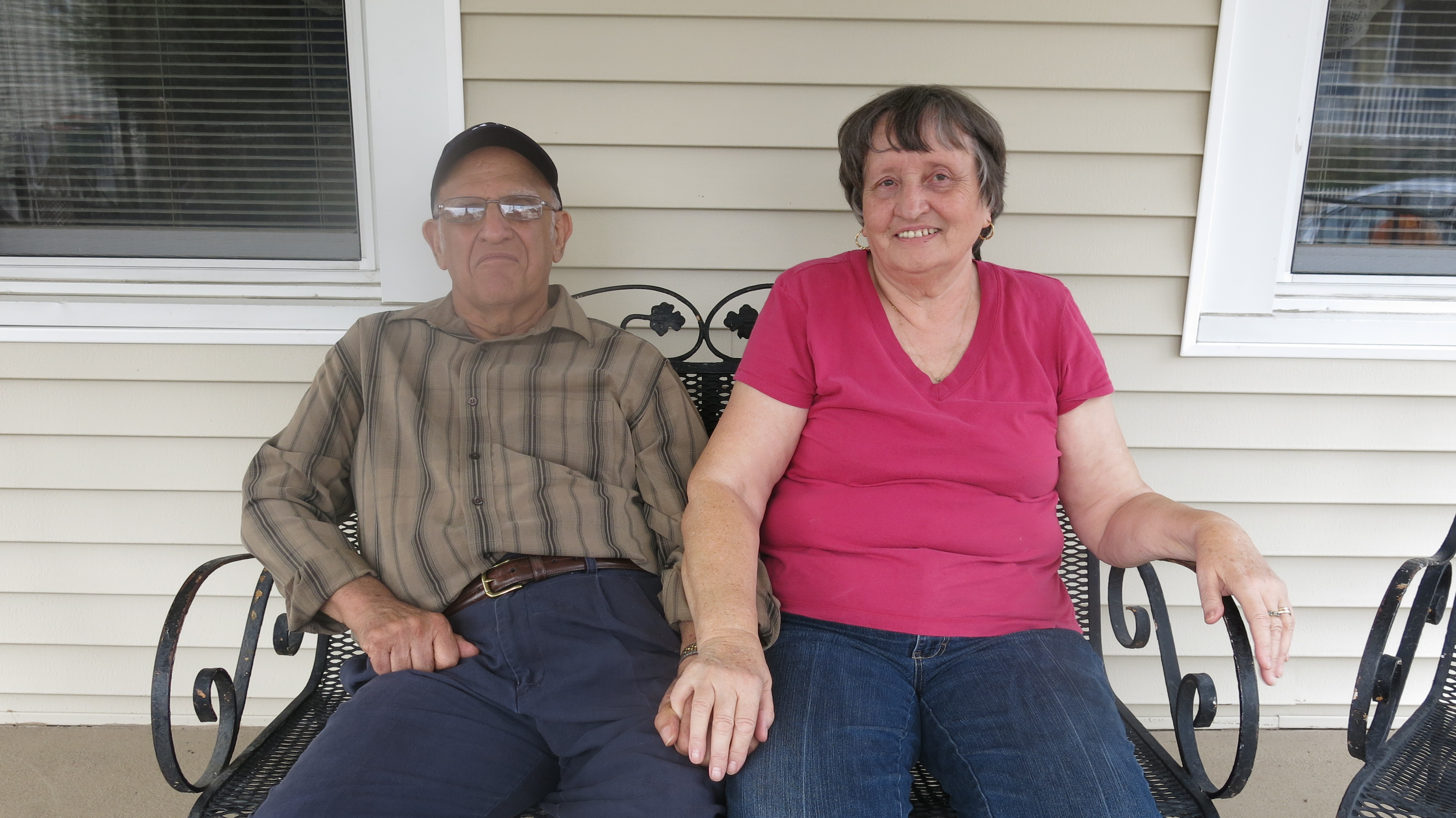
Patrick Fredericks, Sr. is the kind of neighbor who will be out in a blizzard, snow-blowing the sidewalks as far as three doors up the street—that would be up to and including my house. In the summer, he will greet you from the porch with Marianne, his wife of 53 years, and insist on giving a tour of their prolific yet compact garden plot tucked into this crazy-quilt neighborhood of old Beacon, on the mountain side of town.

Mr. Fredericks has lived his whole life in Beacon. He was born there in 1936, and in 1991 retired from the New York State Department of Corrections after 33 years of service. He started painting at the age of 69, when his wife gave him an acrylic paint set for Christmas in 2004.

“I found that I enjoyed the experience. I never painted before then.”

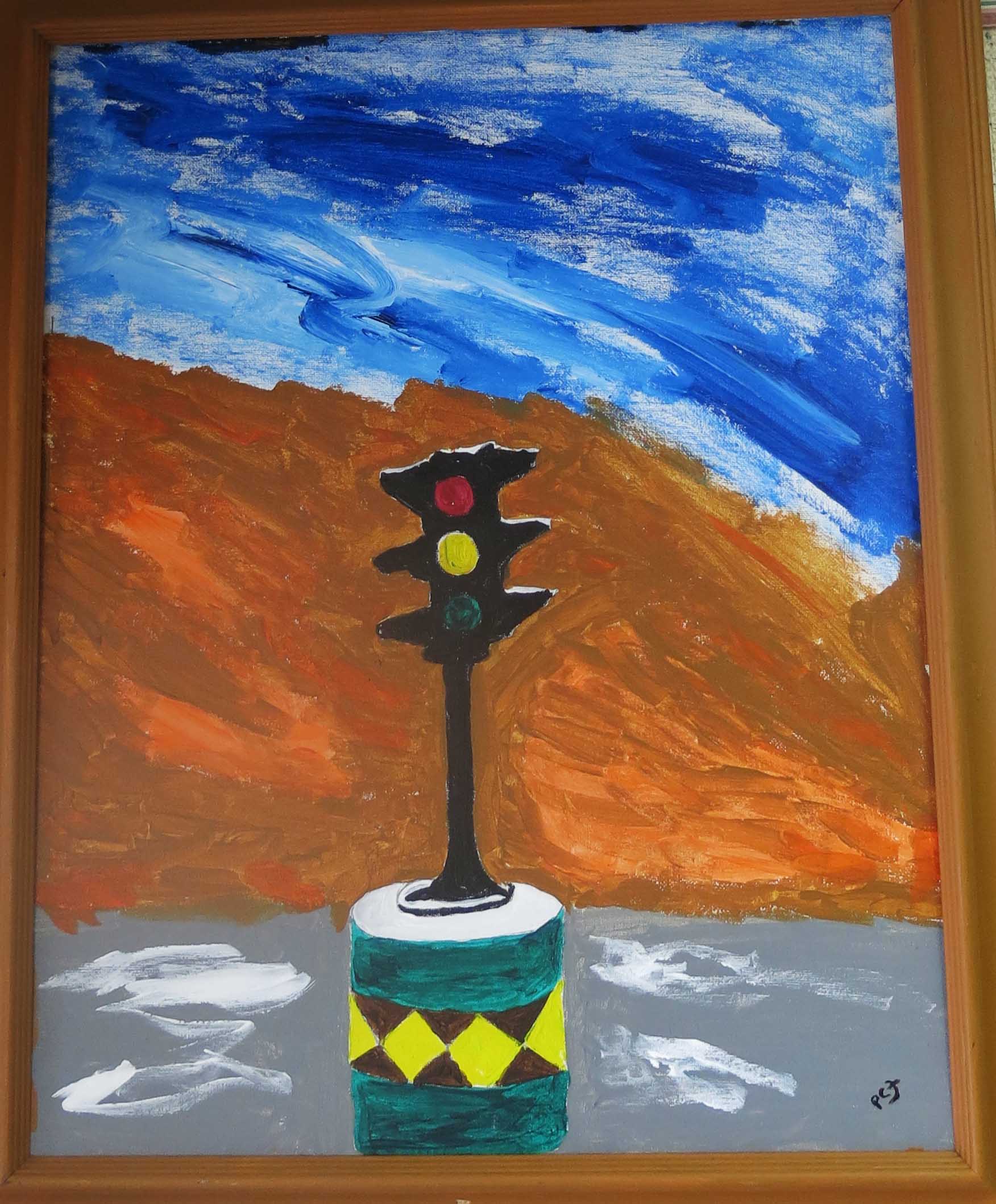
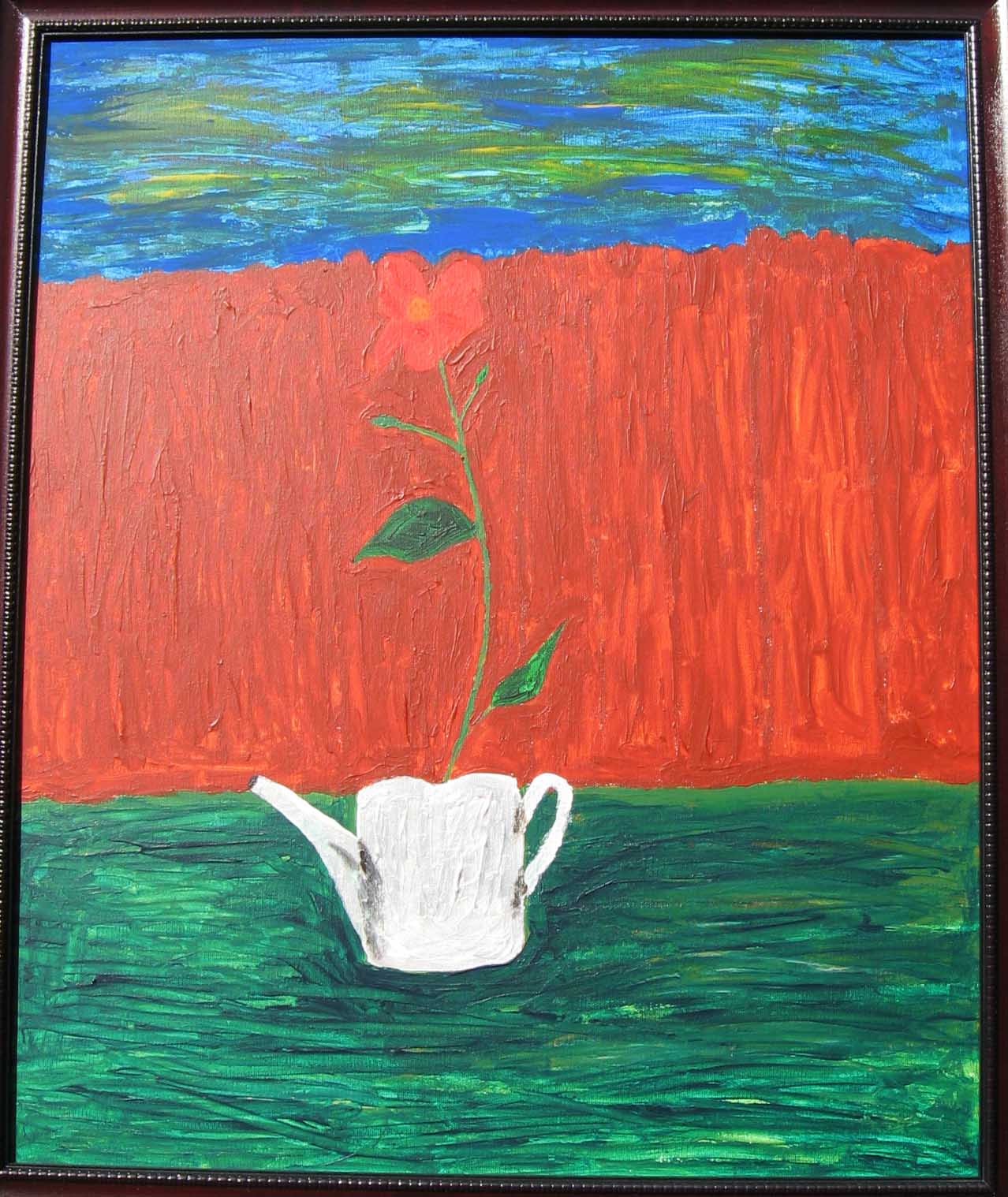
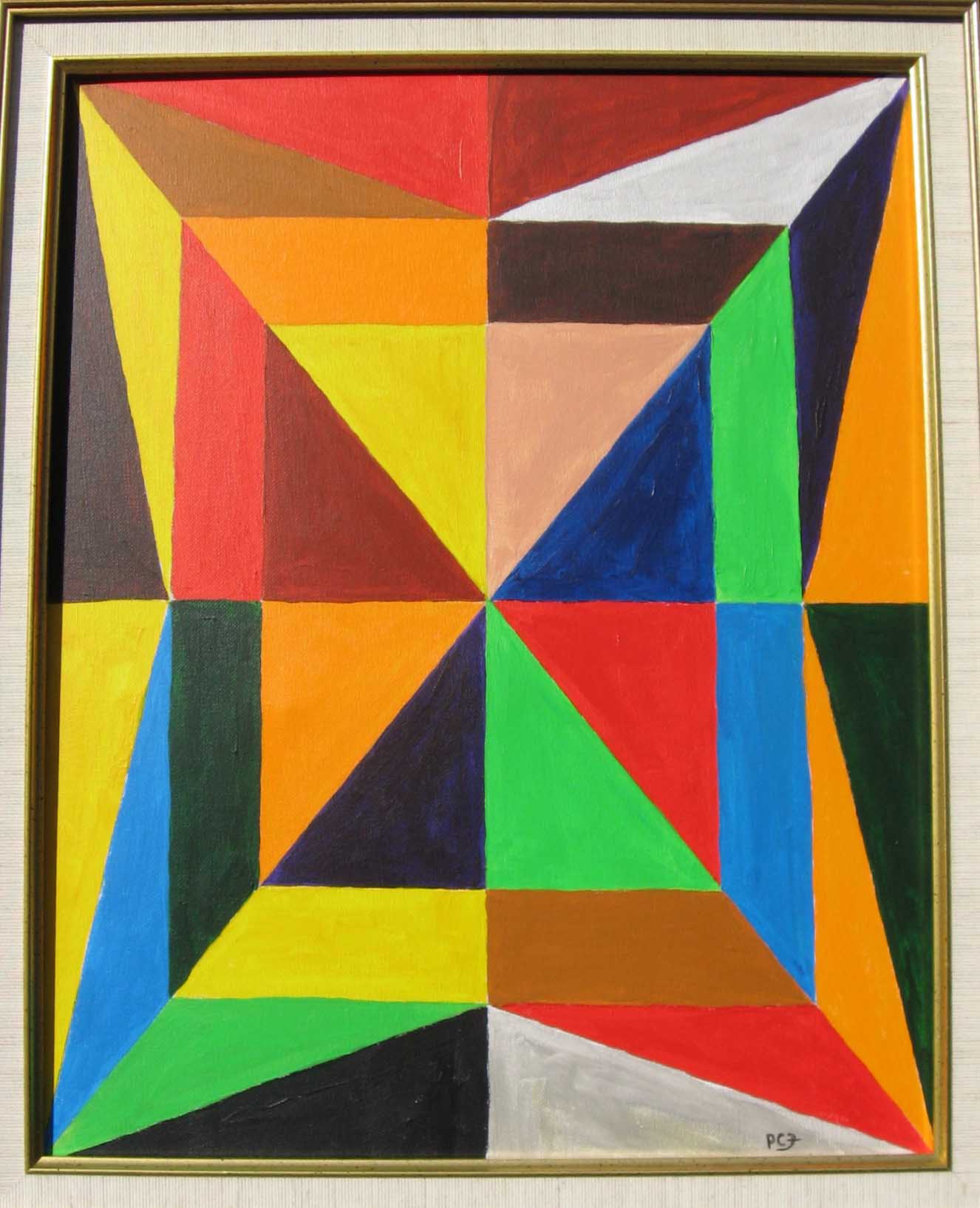
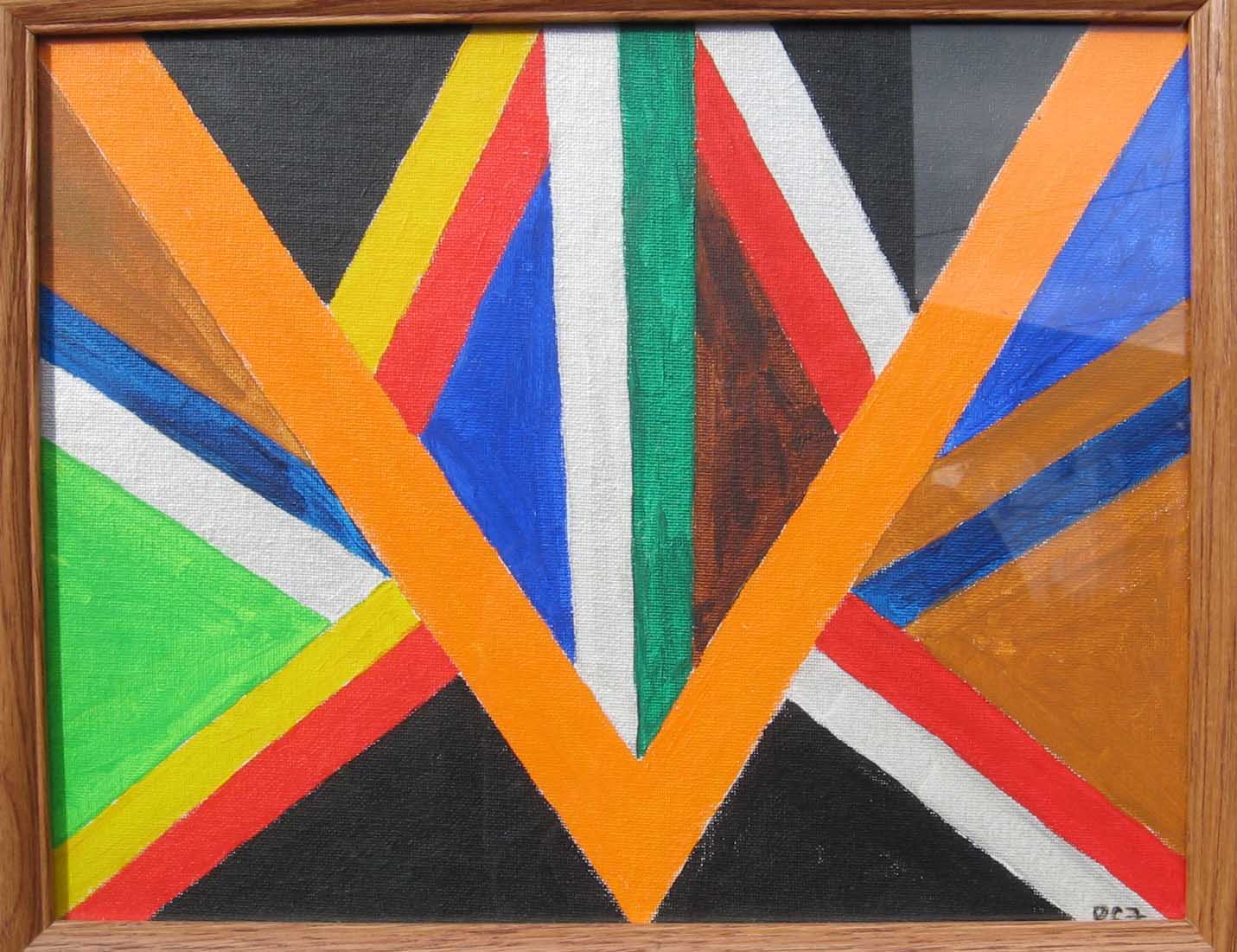
After Mr. Fredericks painted a dozen or so canvases, he asked if I would look at them, to offer him any advice, since he knew I was an illustrator and artist. When I entered the cozy living room, full of pictures and souvenirs and memories of a family life fully-lived, I wasn’t quite prepared for what jumped from his canvases.

Vibrant colors, abstract divisions of space, spare yet sophisticated compositions that yielded both the symbolic and the representational—the unique purity that comes from being self-taught was much evident. None of the umbrella terms for this style seemed to capture the work—primitive? Visionary? Outsider? Those labels are usually accompanied by bios of artists consumed by religious demons or confined by prison bars. Mr. Fredericks is all the more unusual for being a happily married man, a good neighbor, and a truly expressive artist.

My advice was simply to keep painting, and to contact the Howland Cultural Center. He now is included in the annual Artist Members Exhibit.

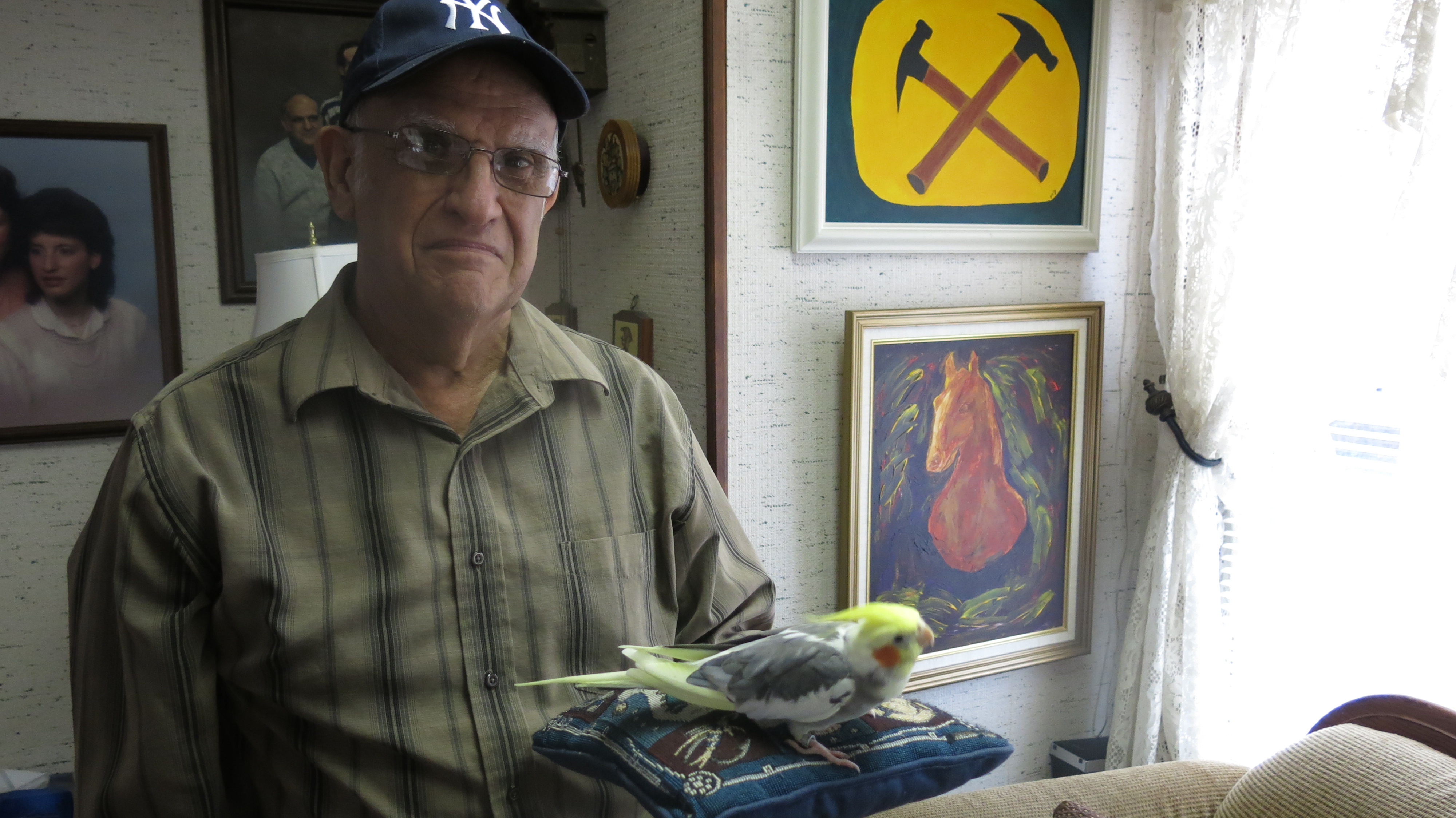
Meanwhile, he and Marianne have adopted a cockatiel named Max, who constantly vies for attention. I have a feeling that Max will be a future subject for the prolific artist. But he has to wait his turn. Next up is Derek Jeeter.

monarch dummy light horse flower geometric color teeth hammers V IMG_2124 IMG_2143

Artwork copyright Patrick Fredericks